
Saudi Arabia’s technology story has been propelled in large part by the scale of its ambition, from enterprise modernisation and cloud adoption to new data centres and, increasingly, the computing infrastructure required for AI. The focus is also extending to the capabilities that sit behind that growth, with greater investment in advanced manufacturing, engineering expertise, research and regional decision-making within the Kingdom.
Lenovo’s growing footprint in Saudi Arabia reflects how that ambition is beginning to translate into reality. The global technology company has steadily expanded its presence in Riyadh, anchored by a strategic partnership with Alat, the PIF company focused on advanced manufacturing. Announced in 2024, the partnership included a US$2 billion investment in Lenovo through convertible bonds, alongside plans to establish a stronger operational and manufacturing presence in the Kingdom.
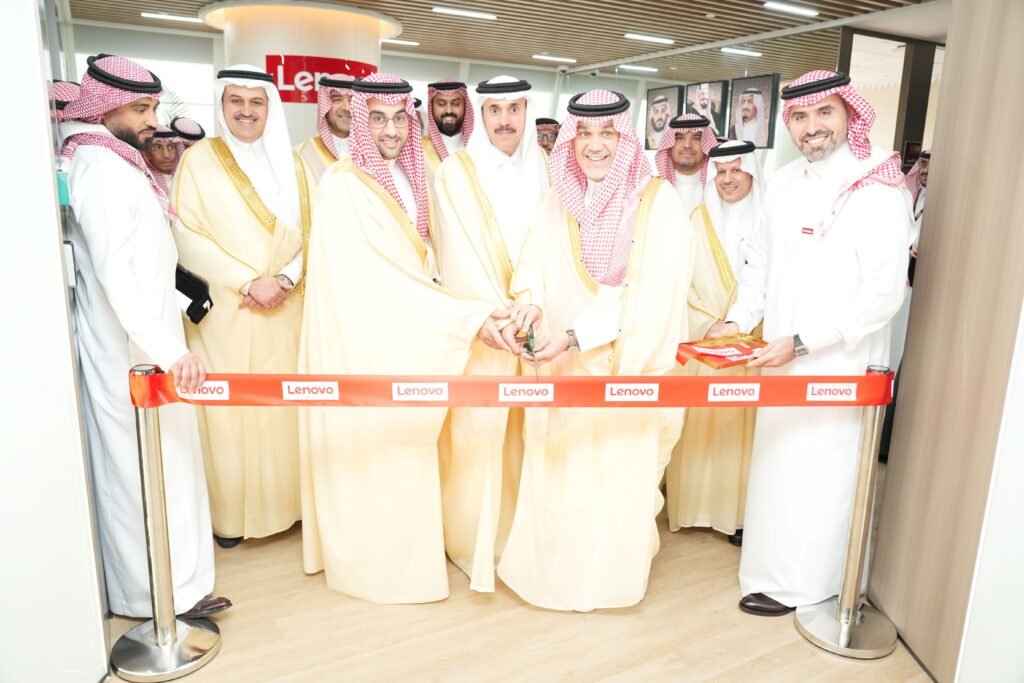
By April 2026, part of that plan had taken shape with the official opening of Lenovo’s Middle East, Türkiye and Africa regional headquarters at Majdoul Tower in Riyadh. But the RHQ represents only one part of a broader strategy and commitment to the region.
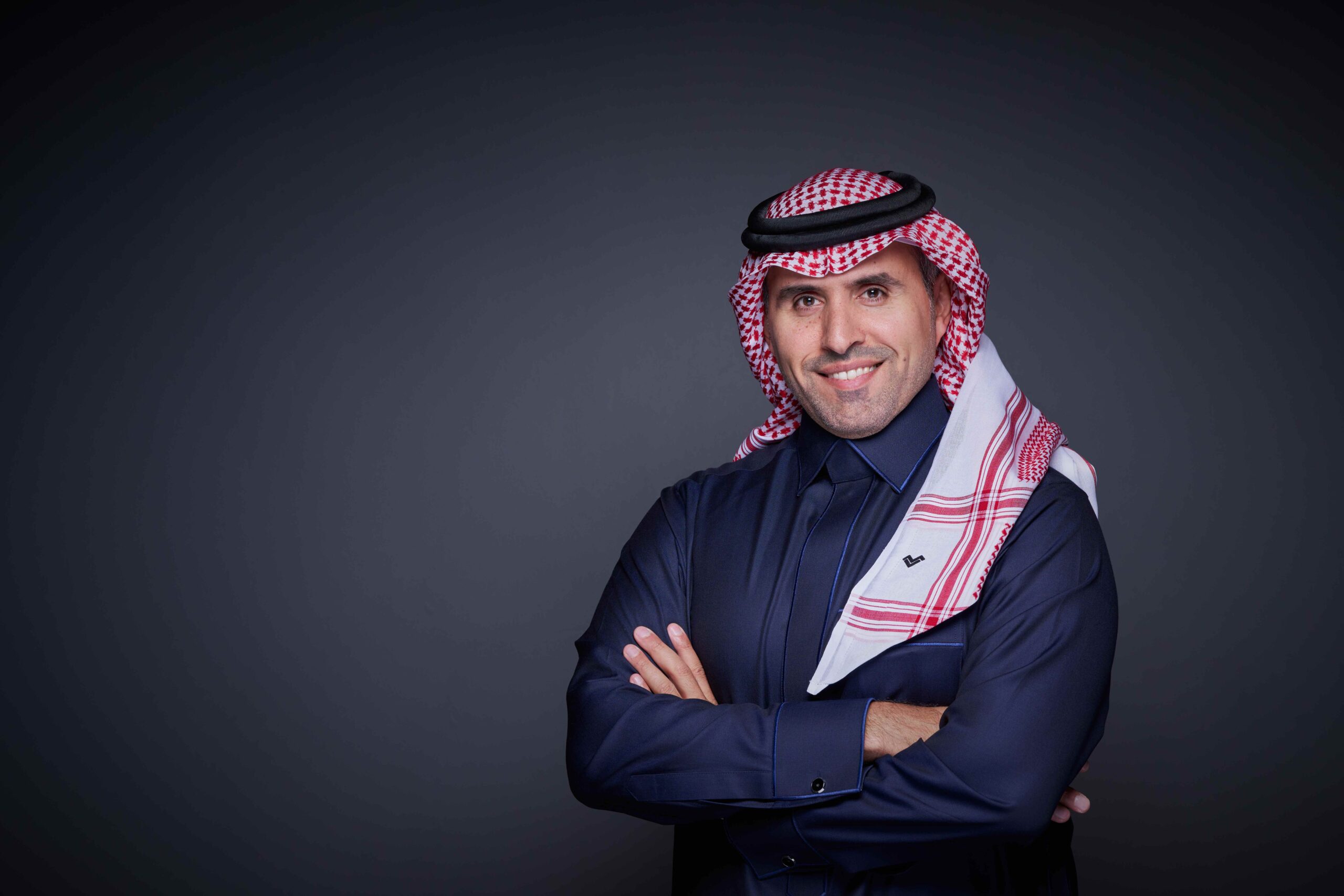
“Saudi Arabia offers the scale, talent and proximity to key markets that make it an important base for Lenovo’s regional business. Our presence in the Kingdom goes well beyond a regional headquarters,” says Tareq Alangari, Senior Vice President and President of Lenovo Middle East, Türkiye and Africa. “Our focus spans four pillars: research and development, manufacturing, regional operations and talent development. What we are building here represents a much bigger and much deeper commitment to the Kingdom.”
That vision is taking physical form as Lenovo builds its 200,000 sqm manufacturing facility within the Special Integrated Logistics Zone (SILZ) and close to the capital’s international airport. The facility will produce laptops, desktops, Motorola smartphones and servers, adding a major manufacturing component to the company’s wider Saudi presence.
“We saw an opportunity to build something in Saudi Arabia that could have significance well beyond the Kingdom itself,” says Alangari. “The Riyadh facility will be Lenovo’s largest manufacturing site outside China. It is also the only one in our global network to bring all four product lines together: laptops, PCs, mobile devices and servers. That scale makes it a major milestone, not only for Saudi Arabia, but for the wider region.”
The Kingdom and beyond
The geography covered by Lenovo’s regional business gives more context to the decision to invest further in the Kingdom. The company’s regional remit covers more than 60 countries across the Middle East, Africa, Türkiye and Pakistan. These markets vary considerably in infrastructure maturity, enterprise demand and technology adoption, giving greater weight to proximity and local market understanding as the business grows.
“Being closer to our customers is not only about being physically closer,” Alangari says. “It is also about relevance, being closer to the culture and understanding very diverse markets that require focus. That falls directly in line with Lenovo’s strategy of being a global-local company.”
Years of investment in universities and scholarship programmes have also expanded Saudi Arabia’s local talent pool, at a time when more technically intensive operations are being established in the Kingdom. The combination of population, skills and market scale is an important part of Lenovo’s rationale for concentrating more of its regional activity there.
“You can have markets with significant capital, but without the depth of a larger population, a younger population and the critical mass needed to build something at this scale,” he says. “Saudi Arabia brings those elements together. It gives us the market, the talent and the opportunity to build for the longer term.”
The regional significance of the Riyadh operation becomes clearer within Lenovo’s wider manufacturing network. The company operates more than 30 production sites globally, giving it the ability to balance capacity and fulfilment across different locations rather than building individual factories around the requirements of a single market.
“The strategic value of our manufacturing network is flexibility and proximity. We are not building production around a single market, but around our ability to serve demand efficiently across a much wider region,” says Alangari. “The capacity of the Riyadh facility goes well beyond what one market can absorb, which is why we have always viewed it as part of a broader regional model.”
Made in Saudi
The first Made in Saudi Lenovo laptop brings those investments down to a single, tangible product. Rather than positioning it as a technically distinct device, Lenovo sees the device as a marker of how manufacturing capability and expertise are beginning to take root locally.
“What makes the device unique is not its technical specifications. We produce these products in other parts of the world,” says Alangari. “What makes it unique is the knowledge transfer to the region. It represents our belief in the human capital here and in the potential of these markets. The real story is the capability being built around the product.”
Saudi engineers have spent time within Lenovo’s established manufacturing operations globally, gaining practical exposure to the systems and processes used across its global factory network before bringing that knowledge back to Riyadh. The first device brought the people behind that transfer together with the product they had helped create.
“When we saw the first device, there was a Saudi engineer who had trained in China standing alongside a Lenovo expert, and they were holding the device together,” he says. “It was a very proud moment because you could see local talent contributing to global innovation from the Middle East. It is not only about the technical specifics of the device. It is about where this can go and the capability we can build in the region.”
Lenovo’s talent programmes extend beyond the production floor, while R&D adds another technical layer to its Saudi presence. The company already runs pre-sales and partner enablement programmes in the Kingdom, alongside training for its own teams. Alangari says Lenovo has around 21 R&D centres globally, with Saudi Arabia becoming its first such presence in the region.
“Developing local capability is part of how we operate in every market. We already have ongoing programmes for our teams and channel partners, and in Saudi Arabia we expect that to become even more structured as our presence grows,” he says. “The idea is to bring Lenovo’s global supply chain, leadership and best practices together with local talent, local market knowledge and closer engagement with customers.”
The more consequential measure of localisation may ultimately be how much technical expertise develops around the production line rather than simply how many products are assembled locally. Manufacturing, R&D and skills development place different kinds of capability within the same market, while connecting local teams more closely with Lenovo’s wider technology organisation.
Building for the AI era
Lenovo’s Saudi expansion is also taking place as AI drives new investment in data centres, power and high-performance infrastructure across the region. With servers among the four product lines planned for Riyadh, the manufacturing programme reaches beyond PCs and smartphones into the infrastructure layer supporting that demand.
Saudi Arabia has placed AI at the centre of its technology agenda, with access to energy, available land and growing data-centre capacity forming part of the wider investment picture. Computing infrastructure remains another part of what is required to translate those resources into operating AI capacity.
“To be a global AI hub, you need three things: land, energy and technology infrastructure,” says Alangari. “Saudi Arabia has the land and the energy. Technology infrastructure is where Lenovo can contribute. Having that capability here becomes an important part of supporting the wider AI ambitions of the country and the region.”
The enterprise AI model is also becoming less concentrated in a single environment. Workloads can move between personal devices, private infrastructure and cloud platforms, while data residency and sovereignty remain important considerations for governments and regulated industries.
“You will have AI on your device, in your laptop and mobile, but also in your own sovereign data centre within a company or government environment,” he says. “That closes the loop for sovereign AI, and that is part of what we are focused on enabling in the region.”
LEAP will provide the next public window into how that strategy is developing. Lenovo is preparing a number of announcements for the event, including updates around the Riyadh manufacturing programme and new partnerships with Saudi and regional organisations. “At LEAP, you will see Lenovo working alongside some of the biggest ecosystem players in the country, with new partnerships and further updates around the factory and the devices we have successfully produced,” says Alangari. “Sports technology will also be an important focus for us, particularly as the region prepares for major events such as the World Cup in 2030 and Saudi Arabia in 2034.”
Full mass production in Riyadh will be the next major milestone. Beyond factory output, the more revealing measure will be how Lenovo’s Saudi presence develops as the RHQ, manufacturing operation, R&D and talent programmes mature, and how far the capabilities established in the Kingdom feed into its wider regional business.
“Lenovo should not only be recognised as a technology leader. We want to be seen as a trusted partner in the country’s digital transformation, helping to develop local capabilities and local talent, and creating the tools for AI adoption and innovation,” says Alangari. “We are looking for a global impact from the region. We genuinely believe now is the time for this geography to contribute at a global level, and we want to be part of enabling the region to become a global launch pad from Saudi Arabia.”








Discussion about this post