
The traditional security perimeter has been disappearing for years. What is replacing it is not simply a more distributed enterprise estate, but an environment where applications, devices, cloud platforms, networks and increasingly AI systems are constantly exchanging data and making decisions across organisational boundaries.
The security challenge is no longer confined to protecting each component. A well-protected system can still become part of a vulnerable architecture if the connections around it are poorly governed. As enterprises introduce more automation and machine-to-machine communication, those relationships are becoming harder to see and control. Security must therefore be considered when systems are designed and connected.
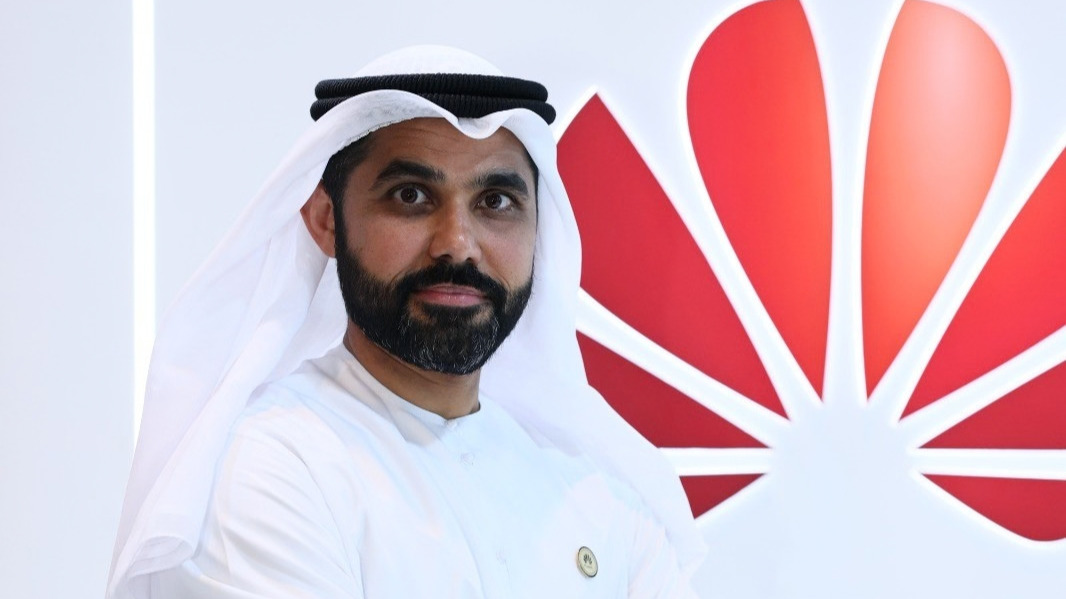
“At Huawei, security is in our DNA,” says Abdulaziz AlNuaimi, Chief Security Officer, Huawei UAE. “It starts at the design phase. When we integrate technologies, we make sure those connections do not create cybersecurity gaps. We also continue testing and managing vulnerabilities and configurations as needed.”
During GISEC GLOBAL 2026, where Huawei returned as Lead Strategic Partner for the third year, the company highlighted product governance, sector-specific cybersecurity, and disaster recovery and business continuity. Together, these priorities show how security extends from product design to the continuity of critical operations.
“Our security approach centres on three main areas,” says AlNuaimi. “The first is governance, starting with the product itself: how we govern our products and ensure security requirements are addressed across each project. The second is developing AI-native and cybersecurity solutions for different sectors, including oil and gas, education and government. The third is disaster recovery and business continuity, helping organisations strengthen resilience and maintain operations when disruption occurs.”
These priorities become more pressing as systems exchange more data and automated processes cross organisational and technology boundaries. The human element remains a major source of risk, from compromised credentials and phishing to accidental disclosure. Security teams must also understand and protect the interactions between machines, applications and networks.
“For years, we saw the human element as one of the biggest security gaps,” he says. “But as machines increasingly communicate with machines, and technologies connect directly with other technologies, the focus also has to move to those interactions. We need to understand how different technology domains integrate and communicate, put stronger controls around those connections, and invest more in securing the way they interoperate.”
The same discipline applies to AI adoption. With AI increasingly embedded into business processes, networks and infrastructure, systems are gaining access to more data and interacting with a wider range of applications and services. Each of those connections has to be understood and controlled before deployment, particularly as AI becomes more deeply integrated into existing enterprise environments.
“We should not simply assume that every new technology needs to be adopted. The first question has to be: what does the organisation actually need?” says AlNuaimi. “From there, you look at the risk, assess where the technology fits, and decide what should be adopted. Only then do you look at how it connects with the rest of the environment, how those connections are secured and what controls need to be in place. Adoption has to start with the business need and the risk, not with the technology itself.”
At GISEC GLOBAL 2026, Huawei framed its presence around “Embedded Intelligence, Built-in Resilience”, reflecting the growing role of AI within infrastructure itself. That creates two connected priorities: using AI to strengthen security, while protecting the AI systems, data and infrastructure organisations rely on—an approach Huawei describes as “AI for Security and Security for AI”.
“AI should not be treated as something that is simply added on top of an existing product,” says AlNuaimi. “Huawei has been building intelligence into its technologies for many years, so it is considered as part of the product itself, from how it is designed to how it operates. The intelligence, the underlying technology and the security requirements need to be considered together from the beginning, rather than trying to add one after the other later.”
That means assessing what an AI system can access, how it interacts with other systems and which regulatory requirements apply to its use. “Organisations cannot focus only on how they want to use AI,” he says. “They also need to consider how it is introduced into the environment, what controls need to be in place and whether it is being adopted responsibly. Innovation should continue, but it has to be matched by the right security practices from the outset.”
Regulatory requirements also need to be considered as part of deployment, alongside the use case and the risks associated with it. “You first need to ask whether you need the service at all,” says AlNuaimi. “Then you look at how it should be implemented securely and which regulations or requirements you need to comply with when adopting it.”
The stakes rise as intelligence moves further into networking and computing. Once AI becomes part of the infrastructure layer, security can no longer sit separately from the technology carrying those capabilities. “Becoming more AI-native means having that capability within the product itself, with security built in as a key part of the AI or networking technology,” explains AlNuaimi. “When the hardware and the underlying technology are already designed with security in mind, you are addressing risk much earlier rather than trying to deal with it afterwards.”
Resilience also matters because no environment is immune to vulnerabilities, outages or disruption. Organisations need to know how quickly they can respond, what happens when part of the infrastructure goes down and whether critical operations can continue while the issue is being contained.
“Continuous monitoring is essential, but resilience is what determines how well an organisation can absorb disruption and keep functioning,” says AlNuaimi. “If there is a security gap, an incident or an interruption to the business, critical operations still need to continue while the issue is being contained and resolved. The objective is not only to detect what has gone wrong, but to make sure the organisation can maintain continuity and recover without a wider impact on the business.”
This year’s GISEC GLOBAL was held under the theme “Cyber First”, reflecting the growing recognition that cybersecurity can no longer sit apart from wider technology strategy. Decisions around product design, architecture, integration and technology selection are increasingly shaping an organisation’s risk profile long before a security control is deployed.
“For Huawei, Cyber First means cybersecurity is embedded into every stage of how we operate,” he says. “It shapes how we engage with customers, how we design and develop products, and how we deliver services. Security cannot sit outside that process or be treated as something that comes later. It has to be built into the decisions we make from the beginning.”
As enterprise infrastructure becomes more intelligent and more interconnected, security is increasingly determined by the choices made at the beginning, not the controls added at the end.







Discussion about this post