
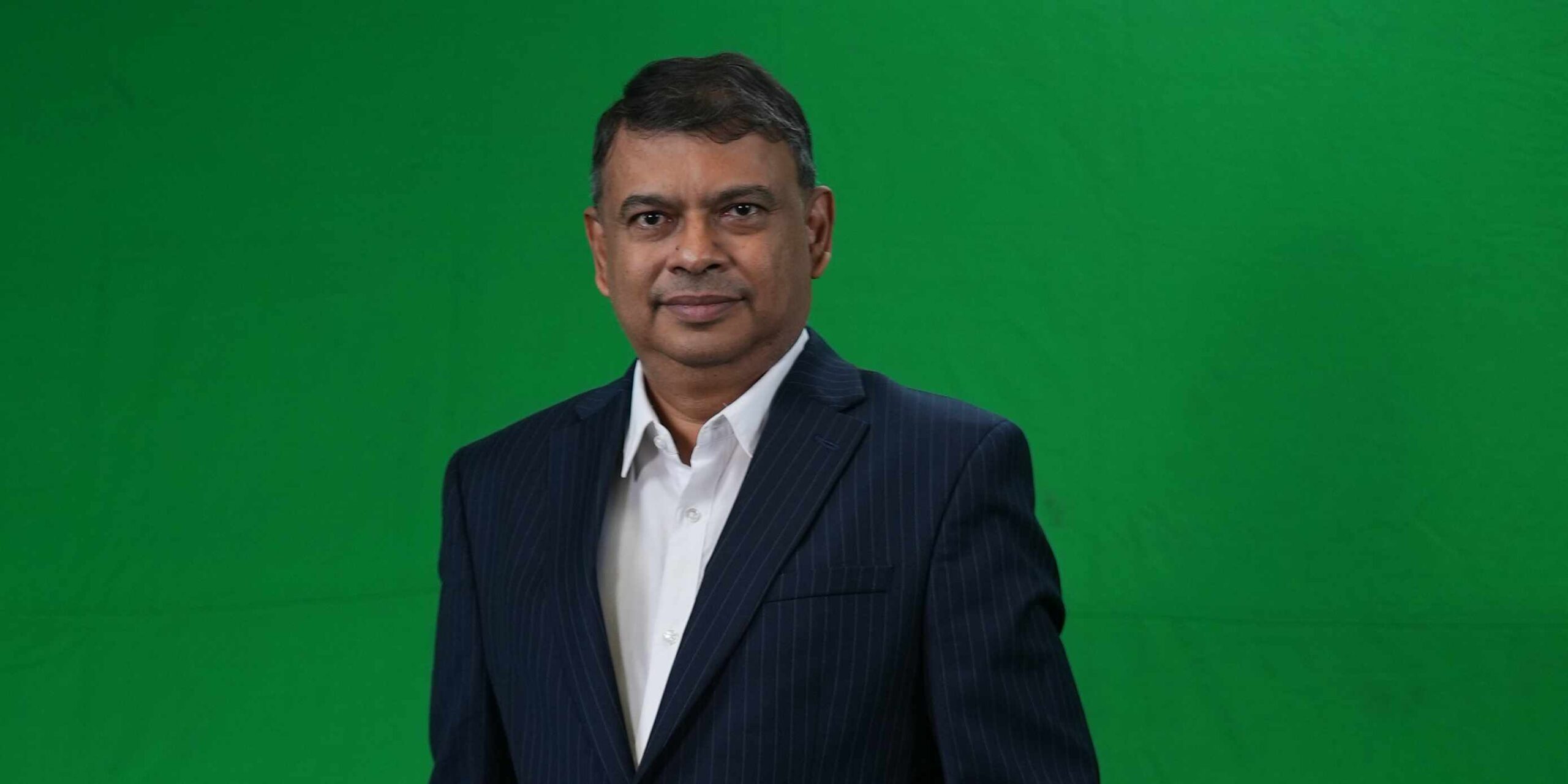
The technology distribution industry is in the midst of a profound shift. What was once a supply-chain business defined by the movement of hardware has evolved into a multi-layered ecosystem of software, services, and cloud solutions. As digital transformation accelerates, distributors are rethinking their role — evolving from logistics partners to enablers of innovation.
Few companies have navigated this transition as effectively as Redington. At 32, it is one of the world’s largest and most resilient technology distribution companies — an $11.8-billion business that has stayed relevant through every shift in the industry’s evolution. Founded in an era when printers defined office technology, Redington has grown into a powerhouse spanning 40 countries, working with more than 400 brands and 70,000 channel partners. Remarkably, it ranks eighth among global distributors despite having no presence in the United States, Europe, or China.
Its trajectory is remarkable for its consistency. Since going public in 2007, Redington has achieved uninterrupted growth for 18 years, delivering over 15 percent CAGR in both top- and bottom-line performance. The company’s expansion has mirrored the industry’s own transformation — from hardware and peripherals to software, cloud, and services. What stands out is how deliberately it has managed that evolution, guided by a leadership philosophy rooted in financial discipline, operational focus, and a long-term view of innovation.
“We’ve grown 15 percent top line and more than 15 percent bottom line every year,” says VS Hariharan, Managing Director and Group CEO of Redington. “That’s been possible because we’ve stayed financially prudent, operationally focused, and alert to the next curve of innovation.”
A foundation of discipline
Redington’s success is rooted in purposeful strategy — one that combines financial discipline, operational focus, and long-term value creation. “Our approach has always been rooted in financial prudence,” says Hariharan. “We focus on profitability and on how those profits are deployed. If any business or geography doesn’t make sense financially, we won’t hesitate to exit.”
That clarity has allowed Redington to scale responsibly, balancing ambition with accountability. However, Hariharan notes that growth isn’t confined to financial outcomes — it extends to people and culture. “We hire employees for the long term. It’s not a hire-and-fire kind of an approach,” he explains. “We have a very good management team, both mid and senior management, who are with us for more than 20 years.”
Redington has focused on nurturing stability and performance at every level. “Our compensation system metrics are all tied to company performance, including things like return on capital employed,” he adds. That structure ensures employees share accountability for the company’s results and growth trajectory.
By linking financial discipline with talent development and operational resilience, Hariharan emphasises that Redington has fostered a culture of sustainable growth built on consistency, trust, and long-term thinking. This philosophy — disciplined, patient, and people-centred — has made the company agile through every cycle of change.
Global Scale, Local Strength
Redington’s ability to stay ahead of disruption lies in how it operates — global in scale yet deeply local in execution. While many of its multinational counterparts tend to apply a one-size-fits-all model, Redington’s strength comes from blending global compliance with local insight. “We behave like a local company, yet remain compliant like a global company,” says Hariharan.
Each subsidiary builds local teams, collaborates with governments and partners, and operates with full financial and regulatory accountability — a balance that has made Redington an indispensable conduit for international technology brands expanding into emerging markets. Together with India, regions such as the Middle East and Africa now account for more than 70 percent of the company’s revenues. “The UAE and Saudi markets are investing heavily in data centres, cloud, and AI,” Hariharan notes. “In Africa, we’re seeing countries leapfrogging older technologies entirely. Global brands rely on us because we can take technology to partners and customers across 40 to 50 countries, even in challenging environments.”
That local grounding has done more than secure Redington’s position in fast-growing markets — it has given the company a clear view of where global technology consumption is heading. The same insight guiding its regional strategy is now driving a shift in its business model.
The $480-billion distribution industry is undergoing a quiet revolution: a quarter of that value now comes from software, cloud, and services, up from 12 percent just two years ago. For Redington, these non-physical segments already represent 15 percent of its business and are expanding rapidly.
“Software, cloud, security, infrastructure, professional services — these are where we see the fastest growth,” says Hariharan. “We’re investing in capabilities and teams to grow faster than the market.”
This evolution marks Redington’s transition from a traditional distributor to what Hariharan calls an “orchestrator of ecosystems” — connecting technology providers, partners, and customers across diverse markets. “The old one-to-many model is evolving into what we call many-to-many aggregation,” he explains. It’s a model built on the same principles that underpin Redington’s global-local balance: adaptability, partnership, and a clear understanding that growth happens by staying close to where technology is being created — and where it’s being adopted next.
Leading through transformation
Transformation at this scale is rarely a product of strategy alone — it’s shaped by leadership that can translate vision into discipline. Hariharan has done so by steering Redington through constant reinvention while keeping its fundamentals intact. His association with the company spans nearly 25 years — first as a vendor during his tenure at Hewlett Packard, then as a board member, and now as managing director and Group CEO — giving him a rare perspective that bridges the worlds of partner, operator, and leader.
That mindset is shaping Redington’s AI journey. “Every brand we work with has an AI strategy — from PCs to smartphones to enterprise software,” he says. “Our first job is to understand that strategy and help partners and customers use it effectively. But that’s just the beginning.”
To structure Redington’s engagement with AI, Hariharan has introduced what he calls the “five Cs”: Capability, Channel, Catalog, Community, and Centre of Excellence — with a sixth, Capacity, under development.
The Capability Centre in Chennai develops and tests AI use cases — from back-office automation to pricing and forecasting — with 75 use cases, 25 POCs, and three already commercial. The company is also building an AI catalog, a community of independent software vendors, and demonstration centres to showcase real-world applications.
The sixth C, Capacity, reflects Redington’s social responsibility. “In India, we’re building training centres with hyperscalers to upskill underprivileged youth in AI technologies,” Hariharan explains. “We’re using our CSR budget to create AI-trained professionals who can contribute to the ecosystem.”
Playing the long game
As Redington scales to new heights, Hariharan keeps a long-term view. He references Simon Sinek’s The Infinite Game to describe his philosophy. “We’re building a company that’s built to last,” he says. “Life is an infinite game; business is an infinite game. It’s not about the next quarter or the next year — it’s about building the fundamentals that allow us to keep growing.”
That long-term outlook is guiding the company’s exploration of emerging domains — from 3D printing and solar technology to drones and data-centre infrastructure. He sees opportunity in the enabling layers behind AI — power systems, cooling, and capacity management. “The technology industry hasn’t seen anything yet,” Hariharan says. “The next ten to thirty years are going to be overwhelmingly technology-enabled. It’s an exciting time, and we want to be a key player in that ecosystem.”
Throughout the conversation, one thread runs through his reflections — trust. Redington’s partnerships endure because of reliability and intent. “Very few OEMs or channel partners have exited from us,” he says. “Do we make mistakes? Yes. But people understand our intent. Even with thousands of employees and partners, we maintain a can-do attitude, and people trust that.”
That trust has translated into resilience — the kind that lets a 1990s distributor thrive in the AI era. For Hariharan, Redington’s future is built on the same principles that defined its past: consistency, credibility, and the confidence to evolve ahead of change.
“We’re lucky to have strong partnerships and the opportunity to keep evolving,” he reflects. “We want to stay ahead — to keep watching the trends, building capabilities, and growing with our partners. That’s how Redington will continue to play the infinite game.”








Discussion about this post