
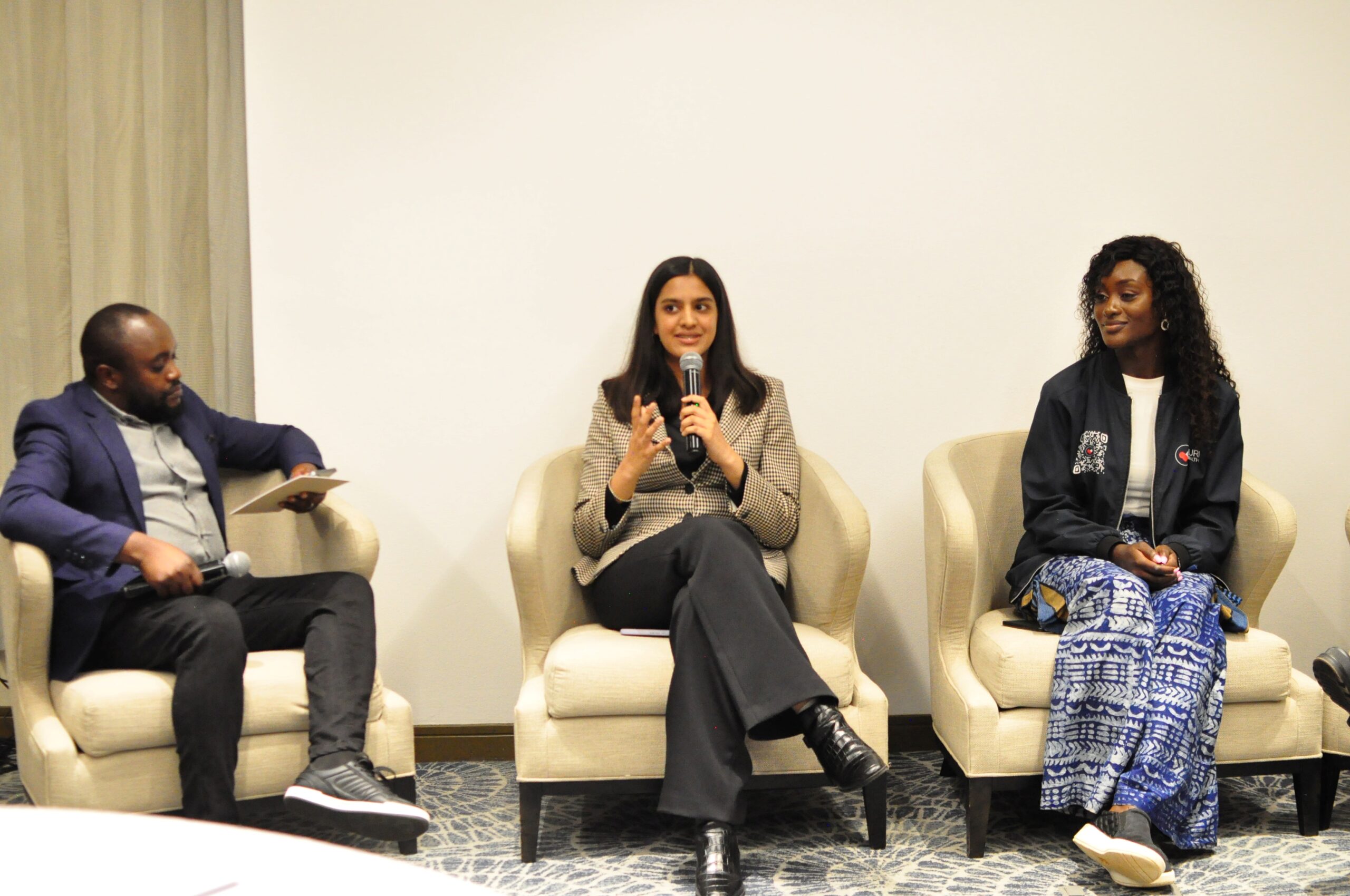
Technology leaders and innovators from the Middle East and Africa (MEA) have called for deeper regional collaboration to ensure artificial intelligence (AI) is developed responsibly, ethically, and in ways that reflect local realities and societal needs.
The discussions took place during an interactive forum hosted in Nairobi by AITHOS founder, Aashna Jain, under the theme “Ethics in AI.” The event brought together experts from business, academia, healthcare, consulting, and the startup ecosystem to explore how emerging markets can work together to build trusted AI frameworks and innovation models.
As governments and enterprises across both regions accelerate AI adoption, speakers stressed that ethics, governance, and localisation must evolve alongside technological progress.
Building AI ecosystems rooted in trust
Delivering the keynote address, Samuel Mbai, chief ICT officer, University of Nairobi said the MEA region has a unique opportunity to contribute meaningfully to the global AI conversation.
“AI is shifting from adoption to ownership. With potential contribution of over US$15.7 trillion to the global economy, Africa must invest in infrastructure, talent, and policy to compete.”
He added that AI is rapidly becoming an economic, political, and knowledge powerhouse, making investment in data infrastructure, talent, and policy alignment increasingly important. The forum also explored how global AI strategies can be adapted more effectively for local markets across both regions.
Youth, startups, and shared innovation
Participants noted that Africa and the Middle East share several opportunities and challenges, including digital transformation, youth-driven innovation, and growing startup ecosystems.
Art Chupeau, managing partner, Baobab Network, an early-stage VC backing African startups, and Founder of Lissom Advisory, a firm helping global investors and operators navigate African markets, noted that investor appetite for AI-native startups continues to grow across the continent.
“Africa’s biggest AI opportunity is not building hype-driven technology but using AI to solve real operational problems in underserved markets. The real advantage will come from combining AI with strong local distribution, proprietary data, and a deep understanding of fragmented African markets.”
Ethics must remain central
Throughout the forum, speakers agreed that trust and ethics will ultimately determine the long-term success of AI adoption across industries.
Aashna Jain, founder of AITHOS, said the next generation will play a defining role in building responsible AI ecosystems.
“Africa’s AI future will be shaped by youth, but ethics must be embedded from the start. We must teach responsible use to build fair, inclusive and accountable systems.”
In healthcare, Daisy Isiaho, co-founder and chief product and CX officer, Zuri Health noted that scaling AI solutions requires stronger trust frameworks and infrastructure alignment.
“Scaling AI-driven healthcare in Africa is constrained less by technology and more by fragmented policy frameworks, limited infrastructure, and persistent trust gaps among patients and providers.”
Maréva Koulamallah, founder and CEO, Marevak Consulting, stressed that Africa’s youth will be central to shaping the continent’s AI trajectory, while cautioning governance.
“Young people are ready to shape Africa’s AI future, but we must build multi-layered collaboration across sectors and also gatekeep ownership of the technologies we create.”
The forum, co-hosted by Marevak Consulting, concluded with calls for stronger Africa–Middle East cooperation to help shape AI systems that are trusted, inclusive, and aligned with the long-term interests of society.








Discussion about this post