
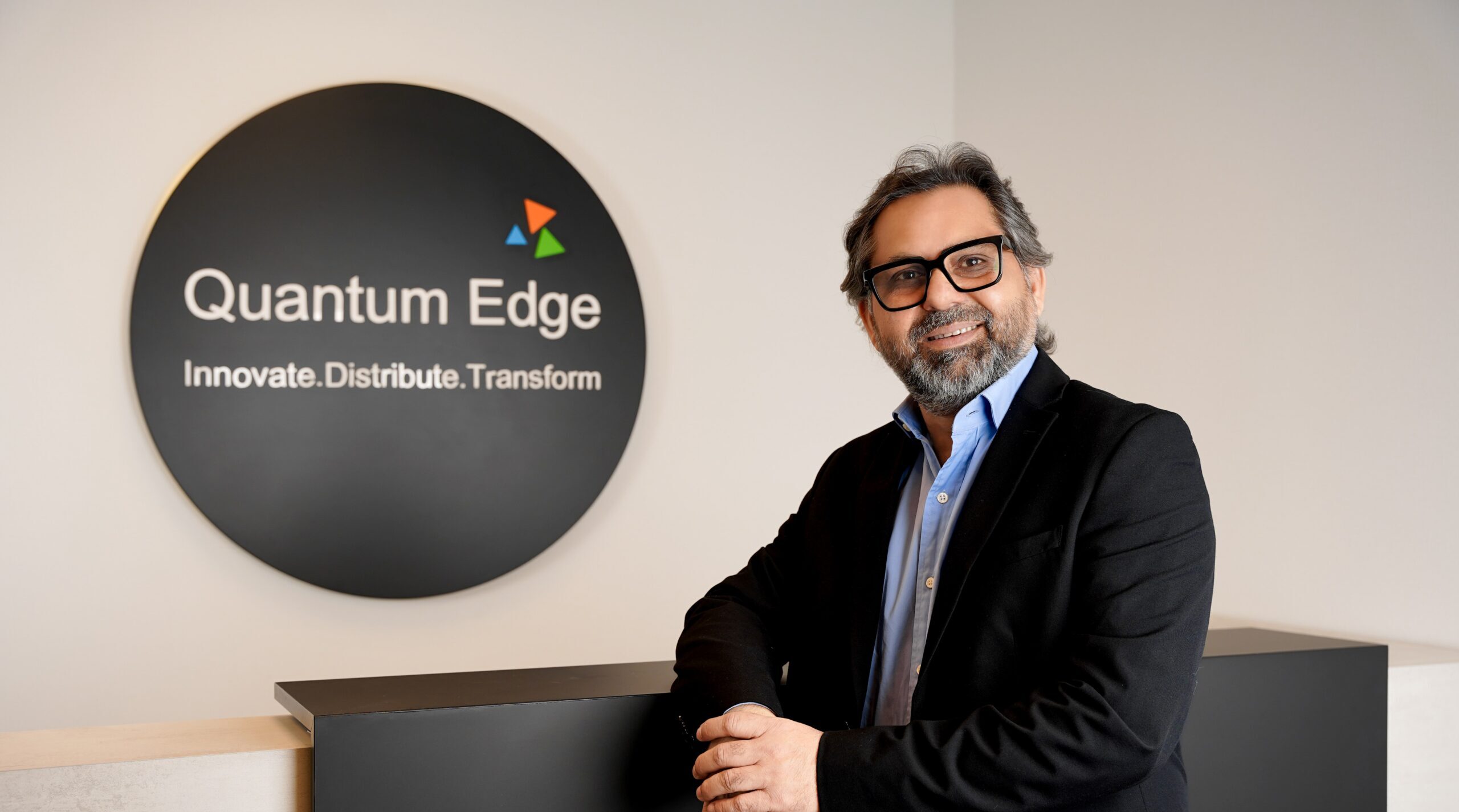
Across the Middle East and Africa, distribution has become a strategic lever in the region’s digital economy. It’s about cultivating ecosystems, enabling partners, and shaping technology decisions that will define future growth. Quantum Edge Distribution, steered by Managing Director Asif Khan, is taking that mandate seriously bridging global vendors with regional opportunities and helping partners seize the momentum in cloud, cybersecurity, and digital infrastructure.
From services to distribution leadership
Quantum Edge’s story begins with a strong foundation in service delivery. For more than a decade, the company has built its reputation on providing dependable, high-quality services across industries. This history of reliability and adaptability became the springboard for its evolution into value-added distribution. This legacy of service now underpins its go-to-market model, which is built on trust, agility, and partner enablement.
“Over the years, we’ve expanded from service delivery into becoming a trusted leader in IT distribution,” says Khan. “Our focus has always been on excellence, innovation, and reliability. That’s what enabled us to transition successfully and build a brand that partners and vendors trust.”
This approach has translated into tangible results. Quantum Edge has completed more than 100 projects, consistently delivering solutions that drive measurable business outcomes. Its technical team holds more than 200 + certifications, underscoring its commitment to staying ahead of industry advancements. And with a 24/7 technical support framework, the company ensures partners are never left without guidance or assistance.
Quantum Edge Distribution has staked its growth strategy on the Middle East and Africa, viewing the region as both its priority market and its biggest opportunity. The region blends ambitious Gulf initiatives like Dubai Smart City and Saudi Vision 2030 with rapidly digitising African economies driven by mobile-first innovation. For IT distributors, this combination offers significant growth potential but also requires navigating varied regulations, infrastructure maturity, and partner ecosystems.
“On one hand, you have government-backed projects like Dubai Smart City or Saudi Vision 2030 fueling demand for AI, IoT, and cloud. On the other hand, distributors must contend with fragmented markets, varying regulations, and infrastructure gaps in places like Sub-Saharan Africa. To succeed, we must bridge these divergent conditions with strategies that are both global and deeply local,” explains Khan.
This environment is also reshaping the core dynamics of the channel. As cloud and SaaS adoption accelerates, businesses are moving away from traditional hardware-centric models. This shift is reducing dependence on physical infrastructure and increasing the need for flexible, scalable managed services. Channel partners are now expected to deliver ongoing support, optimisation, and value-added services rather than one-time product sales. Vendors are pressuring distributors to step into a more strategic role – managing ecosystems, handling compliance, and providing last-mile support. Meanwhile, currency volatility and political instability in parts of Africa add to the complexity.
In response to shifting market dynamics, Quantum Edge has taken a strategic approach to revamp its go-to-market model. The company is realigning its offerings to better meet evolving customer demands, enhancing its service capabilities, and embracing more agile, value-driven engagement strategies to remain competitive. Moving beyond a traditional, transactional view of distribution, Quantum Edge is developing a model that prioritises efficiency, customer-centricity, and service excellence. Operational improvements are being powered by digitised supply chains, AI-driven forecasting, and increased automation. Simultaneously, the company is elevating the customer experience through faster, more responsive support and seamless digital interactions, fostering stronger customer loyalty.
The distributor is also pursuing selective market expansion—deepening its GCC presence while opening opportunities in underpenetrated African markets—while adapting its portfolio to encompass cloud, cybersecurity, IoT, and AI. To stand out, Quantum Edge is pushing further into value-added services such as consultancy, managed services, and financing, and differentiating itself through exclusive partnerships and data-driven strategies.
Quantum Edge’s refreshed GTM strategy is designed to align with the shifting demands of the MEA channel. The approach rests on four pillars: digital transformation, service-oriented expansion, ecosystem partnerships, and localisation. To support this, Quantum Edge is building a digital marketplace portal that allows partners to check inventory, view dynamic pricing, and transact seamlessly. AI and predictive analytics are being applied to sharpen demand forecasting, optimise stock levels, and minimise losses from unsold inventory, ensuring greater efficiency across the supply chain.
“We’re no longer just distributors,” Asif says. “We are solution providers.” The company is investing in systems integration, partner training, cybersecurity services, and as-a-service distribution models that bundle hardware and software into flexible packages.
Quantum Edge is collaborating with fintechs to extend credit lines to SMEs, partnering with hyperscalerrs such as Amazon Web Services (AWS), Microsoft, and Google Cloud to deliver localised services, and aligning with government agendas for e-governance and smart cities.
Regional hubs located in the UAE, Saudi Arabia, Kenya, Johannesburg, and Morocco will enhance logistics capabilities. Adaptations are being made to address language, payment preferences, and cultural nuances across North Africa and Sub-Saharan Africa, ensuring relevance in both Francophone and Anglophone markets. Flexible pricing models, including subscription and pay-as-you-go options, are key to enabling SMEs and startups to access advanced technologies without heavy upfront expenses.
Opportunities across MEA
The MEA region remains a high-growth arena. Africa’s digital economy is booming, fueled by mobile-first adoption, fintech innovation, and e-commerce expansion. Sub-Saharan SaaS markets are projected to grow at double-digit rates, creating heightened demand for IT infrastructure.
In the GCC, government-backed digital agendas are spurring demand for AI, cybersecurity, and IoT ecosystems. Emerging verticals like healthcare (telemedicine), education (e-learning), and financial services (fintech) are all driving demand for advanced IT solutions.
“From Africa’s fintech boom to the Gulf’s smart cities, the opportunities are immense,” Khan notes. “But they must be matched with strategies that address regulatory complexity, infrastructure gaps, and capital constraints.”
Challenges to implementation
Quantum Edge acknowledges that success won’t come without obstacles. Regulatory variability across MEA nations, a shortage of cybersecurity and AI specialists, political instability in some markets, and capital limitations for SMEs all present hurdles.
Khan explains: “We need to address these challenges with resilient operations. That means diversifying logistics, hedging against currency fluctuations, and building training academies to tackle the skills gap.”
Recognising these pressures, Quantum Edge is leaning heavily on emerging technologies to create resilience and unlock new value for partners. The company views advanced analytics, AI, and robust cybersecurity not just as tools for efficiency, but as essential levers to navigate market complexity and deliver consistent support across diverse geographies.
“Predictive analytics will optimise stocking, AI-driven engines will match SMEs with solutions, and intelligent chatbots will provide multilingual support in Arabic, French, and Swahili,” says Khan.
He further notes that as cyberthreats intensify across the region, the distributor is bundling cybersecurity services and forging partnerships with leading security vendors to ensure SMEs receive enterprise-grade protection without prohibitive costs.
But technology alone isn’t enough to drive sustainable growth. One of the biggest barriers for SMEs remains access to capital, and Quantum Edge is positioning itself as a financial enabler within the channel. By acting as an intermediary between global vendors and local resellers, the company can extend credit lines and work with African fintechs to deliver micro-financing for small-scale IT purchases. Usage-based pricing and subscription models are also easing the upfront burden for startups and SMEs, making advanced technologies more attainable.
“This financial enablement not only drives sales but also builds loyalty,” says Khan. “When you help partners grow, they stay with you.”
Equally critical is the development of talent and localisation strategies to ensure long-term competitiveness. The future channel workforce looks very different from traditional distribution: cloud architects, cybersecurity analysts, and AI specialists are now indispensable. To meet this demand, Quantum Edge is rolling out structured training programmes, certifications, and enablement workshops aimed at upskilling partners and strengthening local expertise. Governments across the region are also demanding greater localisation, and Quantum Edge is aligning with initiatives like Saudisation, Emiratisation, and African digital skills programmes—moves Khan says are not mere compliance measures, but investments in building sustainable digital ecosystems.
“Developing local talent is fundamental for digital economies to thrive,” Khan says. “When skills are nurtured within the region, innovation takes root locally, partnerships deepen, and growth becomes self-sustaining.”
To address the region’s regulatory hurdles, infrastructure gaps, talent shortages, and financing constraints, Quantum Edge has shaped a market-by-market strategy that turns these challenges into growth opportunities. By tailoring its go-to-market approach to local realities, the company ensures its partners can compete and thrive across MEA’s diverse landscapes.
Quantum Edge tailors its go-to-market strategy to each regional cluster. In the GCC, the focus is on smart cities, AI, and cybersecurity, aligning with government initiatives and integration partners driving digital transformation. In North Africa, the emphasis is on bilingual platforms and affordable SaaS solutions to support educational technology and expand digital access. Across Sub-Saharan Africa, where mobile-first adoption and fintech lead, Quantum Edge prioritises micro-financing and IoT solutions to serve rapidly digitising economies. In frontier markets with limited infrastructure, the company promotes accessibility through affordable devices and bundled connectivity, alongside partnerships that foster digital literacy.
This tailored approach is designed not only to solve today’s operational and market challenges but also to prepare Quantum Edge for the shifting dynamics of MEA’s distribution landscape. By embedding flexibility into its strategy, the company positions itself to respond effectively to whatever shape the market takes next.
“Looking ahead, three scenarios could shape the region’s distribution landscape,” says Khan. “In the best case, distributors evolve into true ecosystem orchestrators. A middle path would see uneven growth across markets, while the worst case is that those who fail to adapt will lose ground to global players.”
Framework and roadmap
Quantum Edge’s growth framework emphasises five components – a digital core, a value-added services layer, regional customisation, a partnership web, and resilient operations. The roadmap begins with short-term priorities over the next one to two years, including rolling out digital sales portals, deploying AI-driven supply chains, and cementing financing partnerships. In the medium term (three to five years), the company aims to establish regional data centres, expand consultancy offerings, and launch cloud marketplaces. Over the long term (five years and beyond), Quantum Edge envisions evolving into a full ecosystem orchestrator—connecting vendors, governments, and enterprises—while driving innovation through R&D with universities and startups.
The evolving landscape of IT distribution
“The future of distribution in MEA is not transactional. It is about becoming ecosystem orchestrators, enabling digital transformation, and driving innovation alongside partners,” says Khan.
Quantum Edge’s redefined GTM strategy, grounded in digital transformation, services, financial enablement, and talent development, sets a blueprint for its continuous success. With disciplined execution and deep regional knowledge, the company is positioning itself as a catalyst for MEA’s digital future.
“As we look ahead,” Khan concludes, “our goal is simple: empower our partners, adapt with agility, and create long-term growth for the entire channel ecosystem. That’s what redefining the go-to-market strategy really means.” By aligning its go-to-market with MEA’s unique needs, Quantum Edge ensures long-term growth for both itself and its partners.






Discussion about this post