
Industrial innovation is accelerating in Saudi Arabia as the Kingdom pushes ahead with its Vision 2030 agenda. From giga projects and smart cities to ambitious sustainability programmes, technology is being positioned as the backbone of economic diversification and long-term competitiveness. Sectors such as energy, utilities, manufacturing, logistics, and construction are undergoing rapid digital transformation as the country builds a new model for industrial growth.
In response to this momentum—and to underline its commitment to the region—IFS, the global enterprise software company specialising in asset- and service-focused industries, recently hosted IFS Connect MEA in Riyadh. The event gathered executives, customers, and partners to examine how industrial software and AI can help organisations achieve resilience, efficiency, and sustainable growth while aligning with national ambitions.
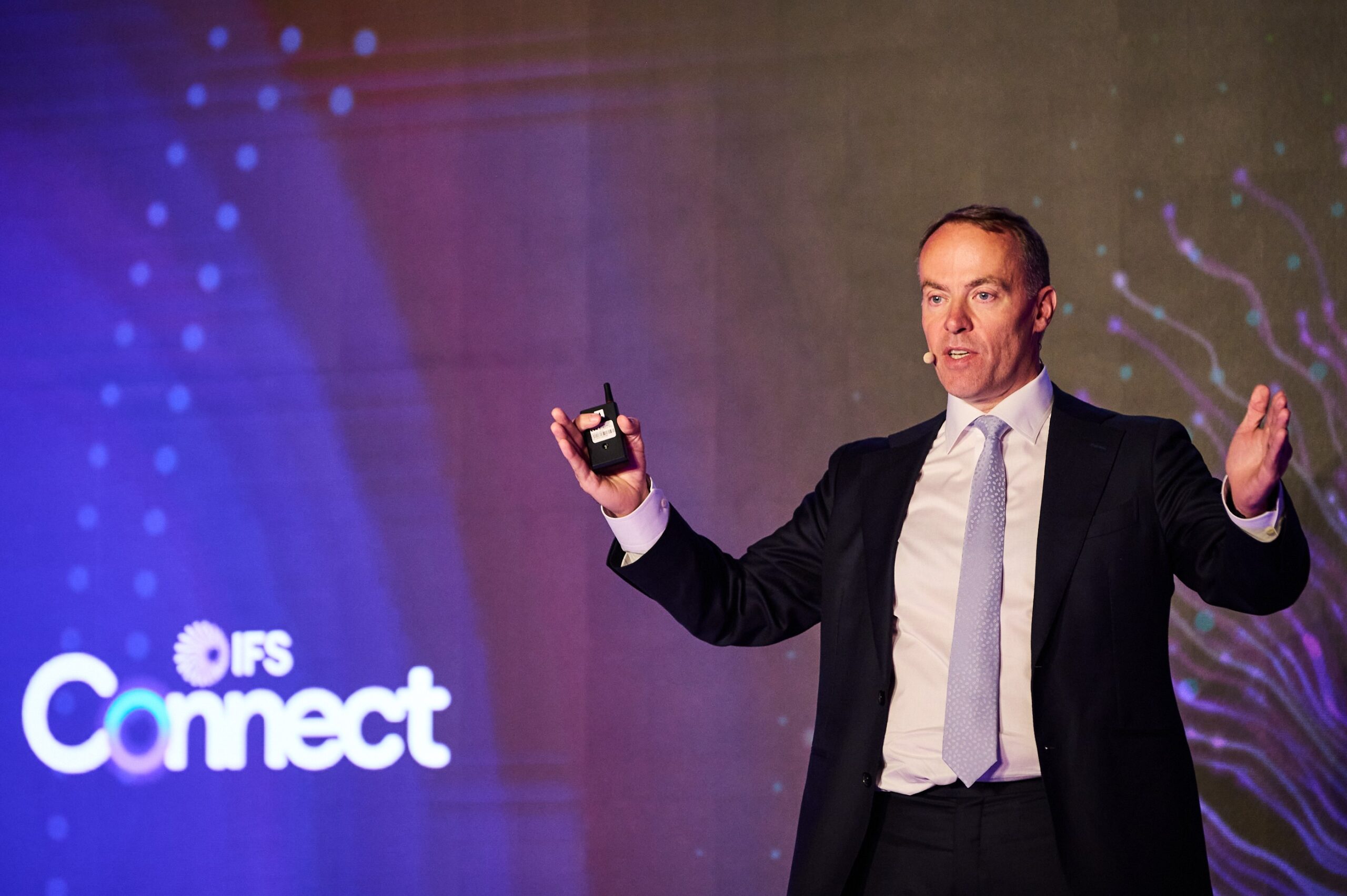
In his keynote address, Mark Moffat, CEO of IFS, laid out the company’s vision in clear terms. He described the mission as nothing less than “to develop the world’s leading industrial AI platform that empowers customers to orchestrate mission-critical operations, assets, people and services in a responsible way.”
He stressed the importance of focus and discipline in that mission, adding that IFS aims to remain “AI-native, future-ready and always customer-focused.”
Rather than stretching itself thin across multiple verticals, Moffat explained, IFS has deliberately concentrated on six core industries—those that are capital intensive, asset heavy, and data rich. He described this as a cornerstone of the company’s differentiation. “We’re not greedy. We’re focused on being the number one industrial software brand, number one in asset and service. All these industries underpin economic prosperity and progress,” he said.
This clarity of purpose has also earned external recognition: Gartner has ranked IFS number one in field service software for seven consecutive years, while the company has achieved €1.6 billion in revenue and now operates in more than 90 countries. “We continue to outperform the market by a factor of three, and all of that is reinvested back into delivering even better solutions for the long term,” he told delegates.
The speech was firmly anchored in the context of Saudi Arabia’s economic transformation. Moffat called Vision 2030 “bold, efficient, transformative—but most of all, inspiring,” and emphasised the role of IFS in supporting its objectives. He pointed to work with the Saudi Electricity Company (SEC) as an example of how the company is helping safeguard critical infrastructure, and noted the importance of partnerships with global and regional manufacturers. Long-standing customer Jotun, for instance, will soon open its facility in the Kingdom to demonstrate how IFS software supports production and supply chain operations. On sustainability, Moffat cited independent research commissioned by IFS, which showed that widespread use of its solutions across the company’s top three markets and focus industries could enable customers to cut global carbon emissions by 2.6 per cent.
After the keynote, we sat down with Moffat for a deeper discussion about how industrial AI is being applied in practice. He explained that many organisations face challenges moving from legacy systems to cloud platforms—an essential step for unlocking AI’s potential. “If you’ve got technology and software that’s 25 years old, it’s really hard for you to benefit from AI. Modern technology manages data better, it’s easier to create APIs and integrations. So number one, we’re focused on giving AI to our existing customers today. And number two, we’re helping those on legacy applications move to the cloud so they can benefit,” he said.
He also drew attention to areas where businesses could be missing opportunities, particularly in utilities. “On average, 30 per cent of water is lost in transmission. If we could find ways to use robotics to identify where leakage is happening in the infrastructure, the impact would be quite great,” he explained.
A theme that ran through both the keynote and our conversation was what IFS calls the moment of service—the point where technology directly shapes customer experience. Using the example of SEC technicians with mobile devices powered by IFS, Moffat said: “It’s about understanding how technicians engage with customers. If there’s an outage, how are they kept informed? Are they receiving alerts that an engineer is on the way, or that the fault has been fixed? Thinking from the end consumer’s perspective forces a different level of thinking about what we provide.”
Closing the event, Moffat reiterated the company’s long-term commitment to Saudi Arabia. He underlined the importance of working with trusted local partners such as Saudi Business Machines (SBM) and investing in local skills. “We’re not in the Kingdom for quick wins or short-term gains. Working with trusted local partners such as SBM is essential because they understand the market, have long-standing credibility, and can help us deliver lasting impact. In line with this, we’re investing heavily in local talent and resources,” he said.
Moffat ended by underlining that Saudi Arabia’s industrial transformation demands sustained collaboration. He stressed that IFS’s role is not short-term, but to stand alongside its partners as the Kingdom builds the foundations of a new industrial economy. “The Kingdom of Saudi Arabia is setting a new blueprint for what an industrial economy looks like, a new global benchmark—and IFS is here to help deliver it with purpose, partnership, trust and pride,” he said.







Discussion about this post