
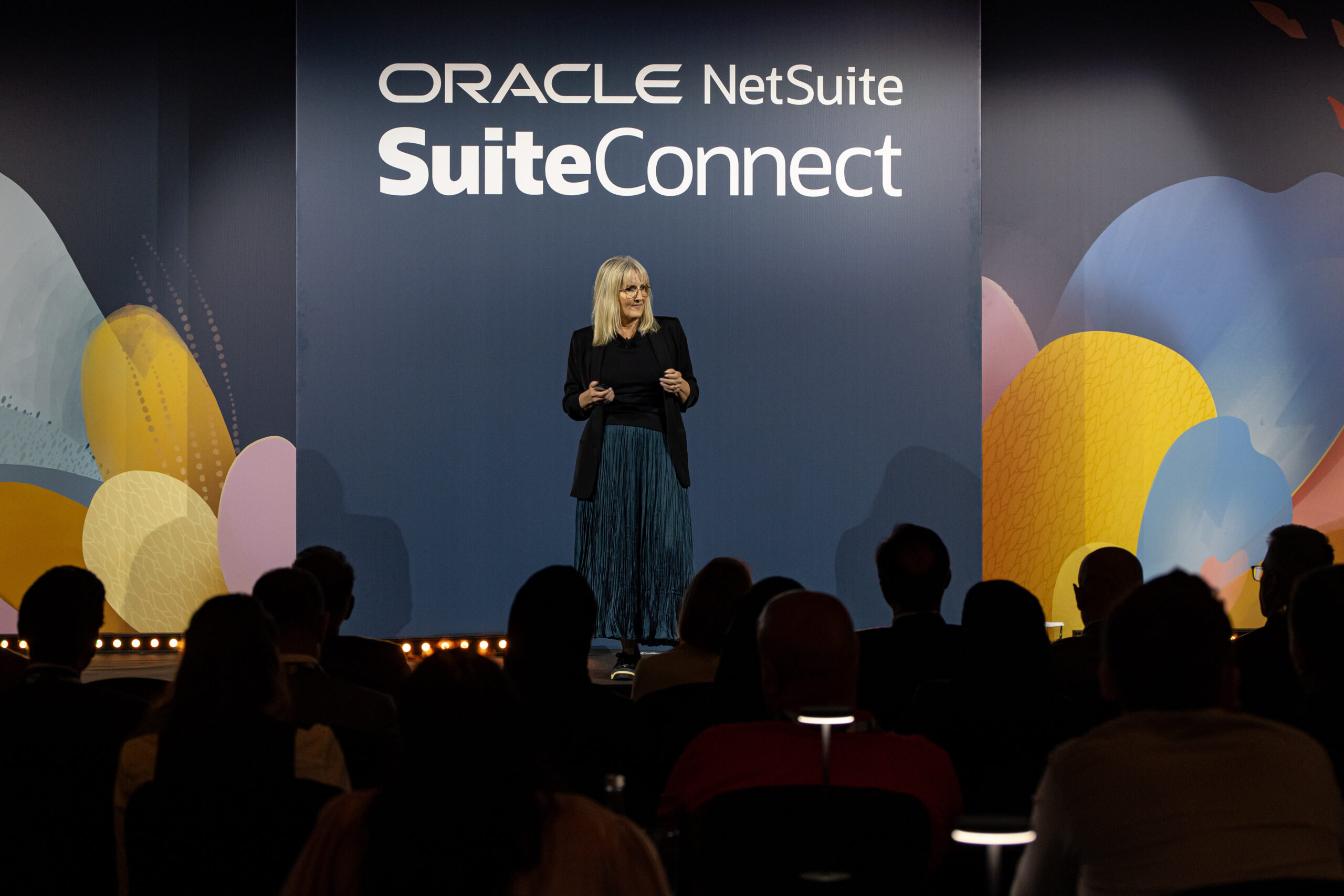
Across industries, AI conversations are increasingly shifting from experimentation to operational integration. CFOs and CIOs are no longer asking whether to use AI, but where it belongs. In many organisations, that question leads back to ERP — the system that holds financial truth, governs transactions, and underpins reporting. As intelligence moves closer to core business processes, the debate is less about replacing ERP and more about redefining its role.
For Nicky Tozer, SVP, EMEA, Oracle NetSuite, the starting point is simple: AI does not sit outside ERP. It sits inside it.
“It’s a topic that comes up quite a lot,” she said. “You’ve seen a lot about what AI can do around the edges of ERP and how it can be embedded into ERP systems to drive value. But in the end, there has to be a system of record.”
Her position is that ERP’s role as the trusted source of financial and operational data does not diminish as AI scales. “There will always be an ERP system of record, and it will increasingly have AI embedded within it,” she said.
That direction underpins NetSuite Next. Rather than treating AI as an overlay, it is built directly into workflows. “ERP will continue to be the system of record, but it will be embedded with more AI so it can drive more analytics and more autonomous, agentic workflows around the ERP system — helping with many of the manual tasks that ERP often generates,” Tozer explained.
James Chisham, VP, Product Management, Oracle NetSuite, returned to the importance of data integrity. “The system of record remains critical because the best data drives the best AI results,” he said. New interfaces, including conversational dashboards, are meaningful only if the data beneath them is unified and governed.
“The way we interact with ERP will change dramatically. You’ll just interact with the system conversationally,” he added, describing a model where a finance leader can ask for operational cash flow or margin performance and receive a direct response.
NetSuite’s positioning as a unified platform becomes more significant in that context. “If you go back to the premise of NetSuite, it’s a unified business platform to run your business,” Tozer said. “Our small to medium businesses minimise the number of additional applications they use because they centralise everything on NetSuite.”
That centralisation strengthens AI deployment. “Having that unified platform also makes it the ideal foundation for AI, because AI is driven by data — and this is your data, unified in one place,” she said.
She acknowledged that companies may never operate on a single application. “Whether you could ever say there will only be one application in a company is unlikely,” she said. “But it will definitely reduce that ‘hairball’ of integrated systems that creates risk, cost and time overhead.”
The technical foundation behind that model is shared with Oracle’s broader cloud infrastructure. “NetSuite Analytics Warehouse uses Oracle Analytics Cloud. NetSuite is architected on the same platforms as Oracle. All our customers run on Oracle Cloud Infrastructure, and they are migrating to the Oracle Autonomous Database,” Chisham said.
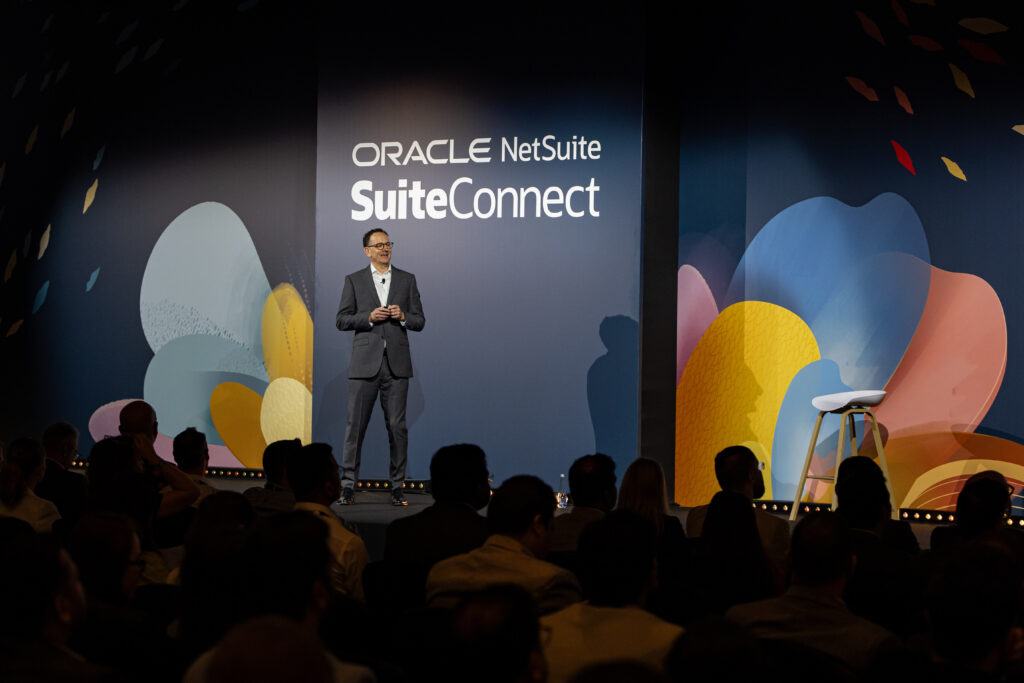
“That gives us a strong technology foundation and enables us to layer AI services across NetSuite. AI sits as a layer across it — woven into the fabric of what customers do.”
Alongside embedded AI, NetSuite has introduced an AI Connector Service designed to allow external AI tools to interact with the system of record. Governance, Chisham emphasised, is built in from the outset.
“MCP bridges enterprise applications and AI systems. Security is top of mind,” he said. “It’s fully underpinned by NetSuite security roles and permissions. Agents cannot access data they’re not authorised to.”
The connector does not weaken data controls. “It’s wrapped in industry-standard authentication and security layers. Customer data is never shared externally or used to train models. We host an internal MCP server in NetSuite to keep it secure,” he added.
In practice, organisations can connect external AI tools while maintaining strict role-based access and data boundaries. The system of record remains protected, even as AI capabilities expand.
Human oversight remains part of the model. “Human-in-the-loop is fundamental. Trust is critical,” Chisham said. “Even if AI flags an exception, a person can step in, review and override if needed. Governance and traceability are key.”
Accountability remains with business leadership. “A CFO must trust and verify numbers. That requires traceability and auditability. AI assists, but humans remain accountable,” he said.
Tozer described the balance plainly. “AI provides advice and assistance. It makes processes faster and less risky, but in the end, someone still says, ‘Yes, I accept this’ or ‘No, I don’t.’”
Measuring AI’s impact requires iteration. “AI success can be intangible because measuring it isn’t always straightforward,” Chisham noted. Feedback across a broad customer base, combined with the ability to drill down into source transactions and review the algorithm behind outputs, will shape how NetSuite evaluates progress. Looking ahead, Chisham was clear that AI within ERP is not about displacing functions. “It wouldn’t render anything obsolete. It’s about automation, insight and agility. AI will automate manual processes, provide insights and help users make better decisions. It frees people from repetitive manual work so they can focus on higher-value analysis and insight — the work they actually trained








Discussion about this post