

Across enterprises, networks are facing unprecedented demands. Cisco’s latest global networking research reveals a stark reality: even a single major outage can cost businesses billions, two-thirds of organisations admit their data centres are not yet capable of handling AI’s workload requirements, and siloed systems continue to undermine scalability and security. The report signals a turning point—AI-driven services, edge computing, and cloud architectures are now commonplace, but without resilient and intelligent networks, these advances could falter.
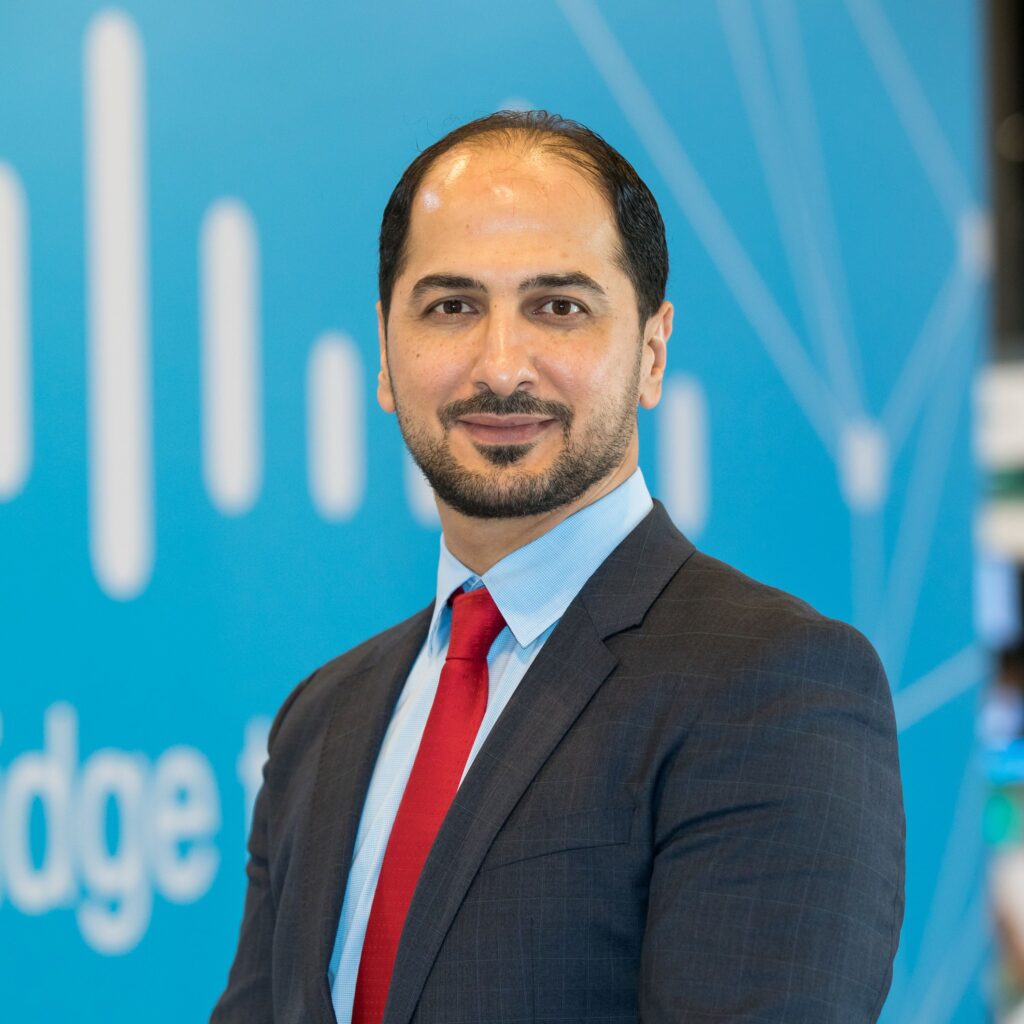
Mohannad Abuissa, Director of Solutions Engineering at Cisco Middle East, Africa, Türkiye, Romania & CIS, describes these findings as a wake-up call for markets such as the UAE, where connectivity underpins economic ambition. “The UAE has positioned itself as a global leader in digital infrastructure and connectivity,” he says. “According to a report by the Telecommunications and Digital Government Regulatory Authority (TDRA), the country recently achieved 100 percent internet connectivity, ensuring every resident has access to the internet, and also set a global record with fibre optic network coverage of 99.5 percent.”
As the first Arab nation to deploy 5G, the UAE has expanded network capacity and efficiency, enabling IoT applications and smart city initiatives that are reshaping industries. The UAE National Strategy for Artificial Intelligence 2031 is another cornerstone of this vision, embedding AI across healthcare, energy, education, transport, and government services, with a projected AED 335 billion contribution to the economy. “The UAE distinguishes itself by combining broad, high-quality internet access with rapid adoption of next-generation technologies,” Abuissa notes. “This positions the country as not just a regional hub, but a global benchmark for connectivity, innovation readiness, and digital transformation at scale.”
That ambition places network resilience firmly in the spotlight. Cisco’s research estimates that a single major outage globally can cost up to $160 billion, disrupting supply chains, customer service, and brand reputation. In the UAE, 99 percent of IT leaders say resilient networks are essential, yet 78 percent have experienced major outages in the past year. “Advanced network observability provides real-time visibility, while predictive analytics can help prevent escalations,” Abuissa explains. “Implementing AI-powered automation can also minimise downtime and accelerate problem resolution.” He emphasises that resilience is not only about technology—regular testing, staff training, and clear communication strategies are equally important to maintain confidence when disruptions occur.
As AI workloads grow, infrastructure gaps are becoming impossible to ignore. Two-thirds of global organisations say their data centres cannot fully support AI’s demands. Yet Cisco’s findings show that 92 percent of UAE respondents plan to expand capacity—on-premises, in the cloud, or both—to meet this challenge. The UAE’s forward momentum is evident in the Stargate UAE consortium, an ambitious project to build a one-gigawatt AI data centre campus in Abu Dhabi, with Cisco as a key partner. The initiative, targeting an initial 200 MW capacity by 2026, is set to anchor the region’s AI ambitions. Cisco will provide advanced networking, security, and observability solutions that can deliver the scalability and performance such a campus demands. Recognising that many existing data centres were not designed with AI in mind, the company has developed AI-ready platforms such as Cisco UCS AI Servers, Nexus Hyperfabric AI networks, and AI PODs—solutions engineered for high-performance computing, low latency, and energy efficiency. Complementing these are the Hybrid Mesh Firewall and Universal Zero Trust Network Access, designed to protect AI deployments with real-time observability and automated threat defence.
Breaking silos and securing the AI era
But building capacity is only part of the equation. Cisco’s research shows that 64 percent of UAE IT leaders struggle with siloed or partially integrated systems, and nearly half face challenges from incomplete deployments. These gaps impede scalability and expose organisations to evolving threats. “These issues limit scalability and leave organisations vulnerable,” Abuissa says. Cisco’s strategy focuses on integrated, automated, and secure platforms that unify infrastructure across cloud, on-premises, and hybrid environments, while predictive network management and zero-trust architectures provide the resilience modern businesses demand.
He also cautions that AI’s acceleration brings complexity alongside opportunity. “The rapid advancement of AI has entirely transformed networks; however, it has also introduced risks, including security vulnerabilities and increased demands for higher bandwidths and lower latency,” he warns. Cisco advises organisations to adopt AI-augmented security strategies that combine zero-trust frameworks, AI-powered threat detection, and automated policy enforcement to keep pace with growing demands. This dual focus—leveraging AI for optimisation while securing its potential attack surfaces—is essential for UAE organisations looking to advance confidently in an AI-driven world.
The network as the engine of intelligence
Networking, long the invisible backbone of digital change, is moving front and centre as the engine of intelligence at scale. “At Cisco, we believe that there is no AI without the network,” Abuissa says. “Networking and security are inseparable. That’s even more true in the age of AI. The network cannot simply move data, it must also secure it, enforce policy, and build trust at every step.” By embedding security directly into the network fabric, Cisco is aligning its strategy with the UAE’s broader ambitions.
With initiatives like Stargate UAE and a national AI strategy stretching to 2031, the country is wiring itself for a future where resilient, intelligent, and secure networks will determine economic competitiveness. Rather than merely keeping pace with global trends, the UAE is helping define them. As AI becomes central to both business and national strategies, the sophistication and resilience of the network will shape the next chapter of digital transformation in the region.








Discussion about this post