
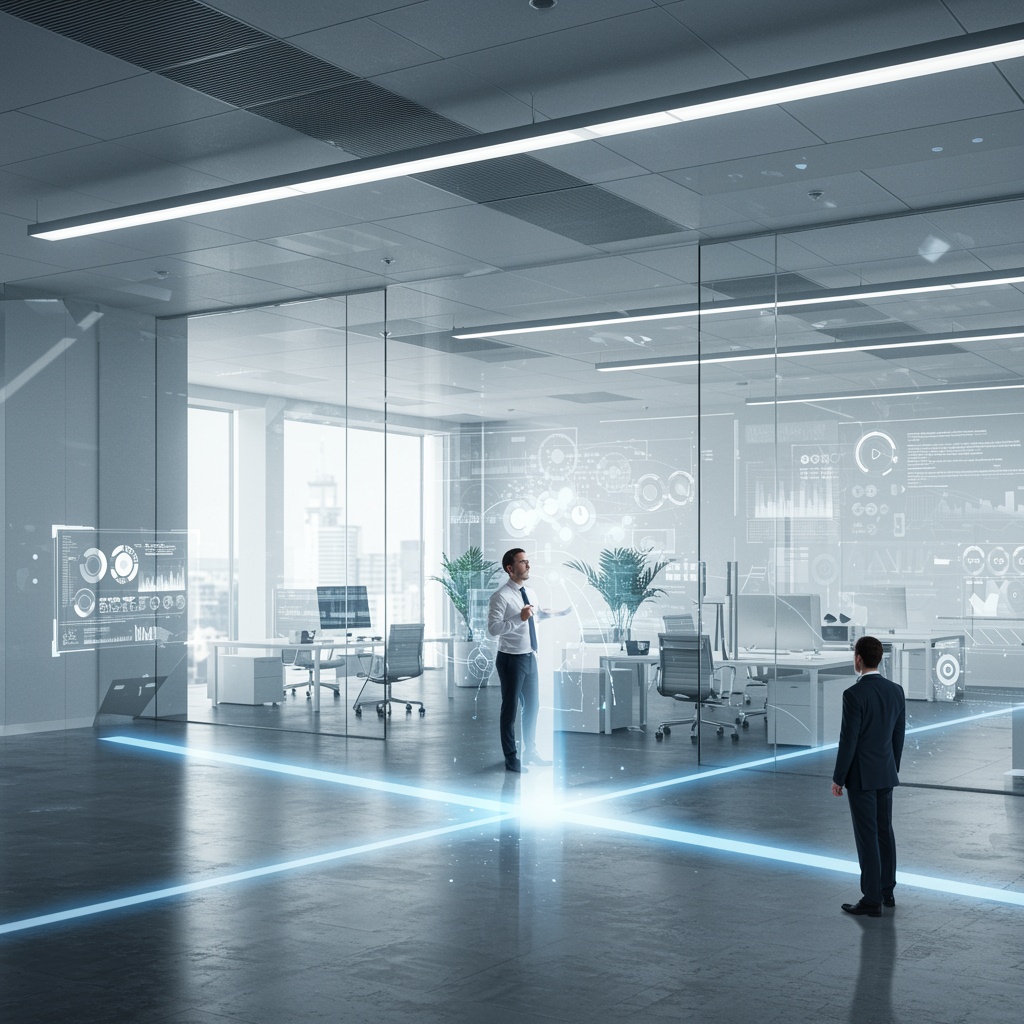
The shift to hybrid work has moved well beyond policy discussions and into the fabric of how organisations operate day to day. Meetings now take place across distributed environments, allowing employees to carry their workflows across conference rooms, home offices, and shared spaces. In this setting, the quality of interaction begins to shape productivity in more immediate ways. How clearly people are seen and heard, how smoothly meetings start, how reliably discussions are captured, these details influence outcomes far more than the tools themselves.
Artificial intelligence is becoming part of that foundation, though not in a way that draws attention to itself. Its role is increasingly tied to how work flows rather than how technology is managed. As organisations move beyond pilots and isolated deployments, scale is starting to be defined by how naturally these systems fit into everyday routines.
“Real AI scale shows up in how naturally it fits into everyday work. It becomes part of the experience rather than something employees have to think about or manage,” says Murad Ali, Head of GCC, Logitech for Business.

“Real AI scale shows up in how naturally it fits into everyday work”
Murad Ali, Head of GCC, Logitech for Business
Where AI shapes everyday interaction
That shift becomes most visible in areas people engage with constantly. Collaboration and communication have emerged as the clearest indicators of progress, particularly as meetings continue to anchor daily activity. Rather than introducing new layers of interaction, AI is being absorbed into the environments where work already happens.
“Progress within organisations is being seen most clearly in sectors that individuals interact with daily, such as collaboration and communication. Video conferencing is one such area where the effects of AI can be seen clearly,” Ali says.
Much of that impact comes from removing small, persistent interruptions. Adjustments that once required attention are now handled in the background, allowing meetings to begin without delay and continue without disruption. These changes may appear incremental, yet they shape how consistently teams can engage, especially when they are not in the same room.
“In addition to being able to provide automatic improvement of audio and visual performance during meetings, AI ensures that participants get a similar experience regardless of where they are located,” Ali explains.
Consistency, rather than capability, is becoming the defining expectation. Hybrid work has made it clear how uneven collaboration can be when technology behaves differently across environments. The expectation now is that a meeting should feel the same whether it is accessed from a conference room or a remote setup, with systems adjusting in real time to maintain that standard.
“Artificial Intelligence helps enhance the consistency and effectiveness of collaboration across various environments. Employees choose to work in multiple settings, like conference rooms and remote offices. AI systems can help create consistency within these environments because they can automatically optimise audio and video for collaboration purposes,” Ali says.
Automation that supports, not replaces
This emphasis on consistency carries through to how organisations approach deployment. Introducing technology without disrupting existing workflows is becoming a key factor in whether it is adopted at scale. Systems that are quick to set up and adaptable across locations tend to integrate more easily into distributed environments.
“One more aspect worth considering is the ease of deployment in various locations. Quick setup and flexibility facilitate further implementation of AI solutions without affecting regular business processes,” says Ali.
As AI takes on more operational tasks, the question of balance becomes more pronounced. The challenge is not about limiting automation, but about ensuring that it remains aligned with how people work. When applied carefully, automation can remove interruptions without interfering with the substance of interaction.
“With the increasing application of AI in workplaces, organisations must ensure that AI is utilised in ways that serve the interests of the people and keep them at the steering wheel of their own operations,” he says.
In practice, this often means assigning AI to the background adjustments that would otherwise break concentration. Tasks such as configuring audio, managing video settings, or handling meeting setup can be absorbed into the system itself, allowing participants to focus on the discussion.
“In the case of meetings, for example, AI could be applied to automate the handling of audio and video settings and the general setup process of the meeting itself,” Ali explains.
At the same time, the boundaries remain clear to ensure decision making, collaboration, and the direction of conversations continue to rely on human judgement. AI supports these processes, but does not replace them.
“Even though automation will play a key role here, humans themselves cannot be bypassed since human decision-making and human judgment will be required for conversations, collaborations, and decision-making processes,” says Ali.
A regional shift taking shape
The broader workplace context in the Middle East reinforces this direction. Hybrid models are now an established part of how organisations operate, supported by ongoing investment in digital infrastructure and national transformation initiatives.
“Over the past few years, we’ve seen a growing trend of businesses in the Middle East embracing hybrid working models. There is also an increasing investment in digital transformation, mainly led by government-led initiatives,” says Ali.
Alongside this, sustainability is beginning to influence how organisations evaluate workplace technology. Efficiency is no longer limited to performance or cost, but extends to environmental considerations and long-term operational impact.
“Since most organisations now align with the regional sustainability goals and commit to more environmentally friendly operations, it also affects how they choose the products they have in the office,” he says.
Within this environment, workplace technology is evolving toward greater responsiveness. Systems are expected to adapt in real time, reducing the need for manual input and allowing employees to focus on the work itself rather than the tools that support it.
“We at Logitech see workplace technology evolving in a way that they become more intelligent and responsive,” says Ali.
As these systems become more integrated into daily routines, their impact is felt through continuity. Meetings run without interruption, collaboration remains consistent across locations, and the experience of work becomes more fluid.
“Thanks to AI, we are able to make today’s workplaces more efficient and give a more positive employee experience by removing barriers between on-site and remote employees and ultimately creating a more seamless collaboration experience for all,” he concludes.





Discussion about this post