

Across refineries, power grids, and manufacturing facilities, the race to deploy AI is colliding with an uncomfortable reality: the frameworks, assumptions, and risk tolerances that govern enterprise technology have almost nothing to do with how these environments actually work.
The boardroom enthusiasm for artificial intelligence has been remarkably consistent across industries, but somewhere between the pilot announcement and the plant floor, a significant number of industrial AI deployments run into the same wall. The models perform. The data pipelines hold. The dashboards look convincing. And yet the technology fails to move beyond controlled experimentation into the kind of operational integration that actually changes how a facility runs. Understanding why requires setting aside the standard enterprise AI playbook and engaging seriously with what makes industrial environments categorically different from every other context in which this technology is being deployed.
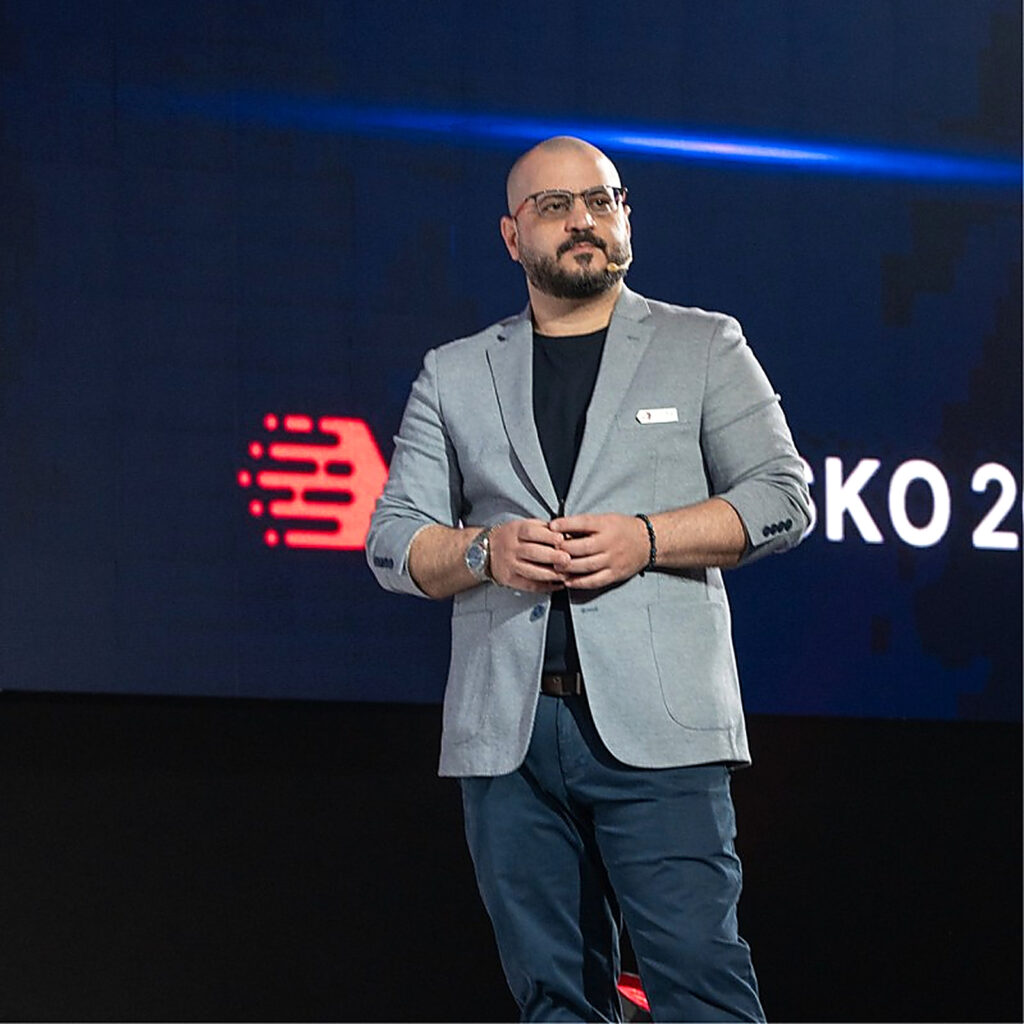
“Technology can guide and support decision-making, but responsibility can never be handed over to algorithms”
Sami Ayyoub, Director for Middle East and Africa, TXOne Networks
In sectors like energy, manufacturing, and critical infrastructure, the operating conditions that AI must contend with were never designed with digital intelligence in mind. Legacy systems built on deterministic logic, physical processes where a single erroneous instruction produces real-world consequences, and an absolute intolerance for instability that enterprise IT absorbs routinely as a cost of innovation — these are not edge cases to be engineered around. They are the defining characteristics of the environment.
“This is very different from traditional enterprise IT,” says Sami Ayyoub, Director for Middle East and Africa at TXOne Networks, a firm specialising in OT cybersecurity. “In places like refineries, power plants, or manufacturing facilities, every decision has a tangible, physical impact. There’s no room for instability.”
That reframes the entire question of what scaling actually means in these settings. “A common misconception is that scaling simply means deploying more AI models. In reality, that’s not the case at all. Scaling AI is about integrating intelligence directly into operations without adding any uncertainty to systems that demand absolute reliability,” he adds.
The data problem
The dominant narrative around industrial AI has tended to focus on capability — on what the models can do, how quickly they can process sensor data, how accurately they can flag anomalies.
Predictive maintenance has become one of the clearest demonstrated use cases, with organisations across energy and utilities using AI to reduce unplanned downtime and extend asset life. Anomaly detection has advanced considerably in environments where identifying small deviations early can prevent consequences that cascade through tightly coupled systems. But the organisations getting the most out of these applications share a characteristic that has less to do with model sophistication than with something more foundational.
“The real driving force behind all of this isn’t how advanced the AI models are. It’s the quality, accessibility, and security of the data they rely on. Without those pieces in place, it’s very difficult for AI to scale in a way that’s both meaningful and reliable,” explains Ayyoub.
In an OT environment, that data is generated by systems that may have been running continuously for decades, communicating through protocols designed long before interoperability was a priority, and never intended to serve as inputs for machine learning infrastructure. Connecting them to modern AI systems requires bridging an architectural gap that carries genuine cybersecurity implications — ones the industry has been slow to reckon with. “Introducing AI into operational technology environments brings a host of unique cybersecurity challenges. AI expands the attack surface, increases connectivity, and creates new dependencies on the integrity of data. It also introduces cyber risks derived from model manipulation or unintended behavior that permeate into the real world,” he says.
The consequences of a compromised model in an industrial setting are not a degraded recommendation or a flawed forecast. They can be a physical event — a process running outside its designed parameters, a system behaving in ways its operators cannot immediately explain or override. That threat profile is one that general-purpose enterprise security frameworks were never designed to handle.
“Every action must be traceable, explainable, and properly governed,” explains Ayyoub. “This is especially critical in industrial environments, where every decision can have real-world physical consequences. Technology can guide and support decision-making, but responsibility can never be handed over to algorithms.”
Governance as the growth condition
The organisations navigating this most effectively have recognised that governance is not a constraint on AI adoption but the mechanism that makes adoption viable at scale. There is a persistent industry assumption that rigorous oversight slows deployment, that competitive pressure should push organisations to move faster and govern later. The evidence from OT environments points firmly in the other direction.
“Trust is the bedrock of all industrial environments. Governance frameworks create that trust by setting clear boundaries, aligning with safety standards, and building security into every stage of deployment,” says Ayyoub. “At TXOne, we consider governance as a tool that reduces uncertainty. It gives organisations the confidence to innovate, knowing that every step is operating within controlled, well-defined limits. Without proper governance, adoption stalls — not because of restrictive rules, but because of unmanaged risk.”
Across the Middle East and Africa, where infrastructure carrying AI ambitions also carries national strategic significance, the measure of success for these deployments is being recalibrated in ways the broader industry should watch closely. Return on investment captures what AI enables, however, it does not capture what AI prevents.
“The ability to keep operations running, anticipate disruptions, and respond quickly under pressure is now a key metric, especially in critical infrastructure sectors. In many cases, the real value of AI lies not only in what it enables, but also in the problems it helps organisations avoid,” says Ayyoub.
In environments where continuity is a strategic priority rather than an operational preference, that distinction carries considerable weight. “In industrial settings, resilience isn’t just a feature — it’s the essential condition that makes innovation possible,” he adds.








Discussion about this post