
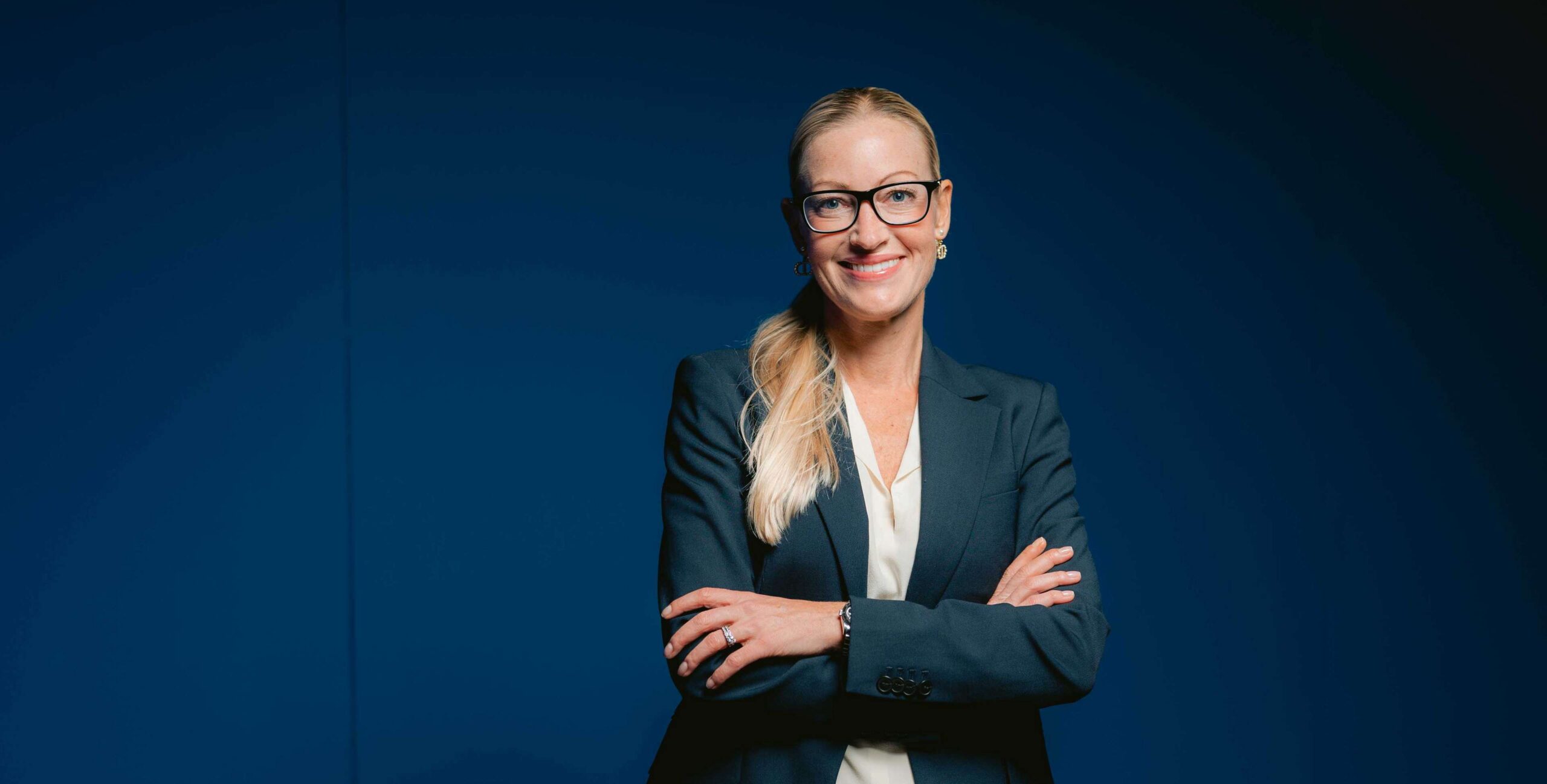
Across the Gulf, the race to become a global leader in digital infrastructure is accelerating. With bold national visions, strategic regulatory frameworks, and a tech-savvy population, countries in the region are advancing ambitious agendas around 5G, AI, and next-generation connectivity. Ericsson has been a key enabler of this transformation—not just as a telecom provider, but as a broader technology partner—collaborating across sectors to shape digital infrastructure, drive innovation, and support the region’s shift toward more connected, intelligent, and sustainable ecosystems.
Leading that effort is Petra Schirren, President of Ericsson Gulf at Ericsson Europe, Middle East and Africa, who brings both global experience and a strong regional focus to the company’s evolving role. Since her appointment in April 2025, Schirren has brought a clear strategic vision and a sharp focus on advancing Ericsson’s mission in the region. Just three months into the role, she speaks with the conviction of someone deeply immersed in the Gulf’s fast-evolving digital ecosystem. From setting strategic direction to strengthening partnerships with operators, her first 100 days have been marked by clarity of purpose and a strong emphasis on execution.
“I’ve spent my first months getting to know my team, meeting customers, understanding our challenges and opportunities,” she says. “That’s been the foundation for setting our strategy.” It’s a grounded approach, shaped by global perspective but deeply attuned to the region’s unique strengths—particularly the alignment across public and private sectors. “What stands out here is the alignment,” she adds. “Governments, industry bodies, and enterprises all seem to move in sync. That kind of cohesiveness makes execution easier and more impactful. I haven’t necessarily seen that in other parts of the world.”
That cohesiveness is already producing measurable results. According to Ericsson’s latest Mobility Report, 5G adoption in the Gulf is projected to reach 90% by 2030—positioning the region well ahead of most global markets. Schirren attributes this not only to investment but to intent. “In this part of the world, there’s a real drive to be the best,” she notes. “That ambition, coupled with strong regulatory frameworks and significant investment from operators, has created a powerful growth environment.”
One of the defining factors of the region’s 5G trajectory is the early move toward standalone 5G architecture. “Standalone 5G is where the network’s full capabilities come to life—network slicing, differentiated connectivity, enterprise-grade use cases. Some Gulf countries are already there, and others are about to launch. It opens the door to far more innovation.”
But the transformation underway in the Gulf isn’t just about speed or coverage—it’s about evolution. Operators across the region are actively reimagining themselves as “techcos”—technology-driven enterprises that go beyond connectivity to deliver platforms, services, and applications across industries.
“Traditionally, telcos were seen as bit-pipe providers—selling data packages. But with 5G, they can do much more,” says Schirren. “Whether it’s fintech, security, public safety, or industrial automation, the network is capable of supporting a wide range of applications. Operators are now in a position to deliver that value directly to enterprises and consumers.”
Ericsson’s role, she emphasises, is not simply to build the networks, but to help partners unlock their full potential. “We don’t work directly with consumers. Our job is to empower our partners,” she explains. “We embed AI into our products, our services, and our operations—to make networks smarter, more efficient, and more sustainable. We’re also exposing APIs that allow developers and enterprises to tap into capabilities like latency, security, or quality of service. The idea is to create a platform—like the one we’re building with Aduna—where operators, hyperscalers, and developers can co-create and grow the ecosystem together.”
One standout example of this partner-first approach is Ericsson’s collaboration with e&, a long-standing Gulf operator actively transitioning into a techco. “This has been about sitting down together, looking at a three-year evolution roadmap, aligning on investment, monetisation, and future capabilities,” says Schirren. “It’s been very open—from CapEx and OpEx planning to shared strategy. They’ve been one of the most successful operators globally in this transition, and we’re proud to be a partner on that journey.”
Another core pillar of Ericsson’s vision is sustainability. It has long been embedded in the company’s values, and Ericsson continues to back that commitment with measurable action. “It’s not just branding for us—it’s embedded in how we operate and how we measure performance,” Schirren says. Ericsson has pledged to reduce emissions across its entire value chain by 50% by 2030 and to achieve net-zero emissions by 2040. “That includes everything—from how we travel and build, to who we partner with, and how we handle end-of-life equipment,” she adds. The company is also collaborating with operators across the Gulf on connected recycling initiatives, ensuring environmental responsibility extends throughout the network lifecycle.
AI is just as central to Ericsson’s strategy, woven into every layer of the organisation—from product development and network operations to customer service and internal optimisation. “AI runs through everything we do—from R&D to troubleshooting to optimising network performance,” says Schirren. “We’re also using it in our own business operations, not just because it improves efficiency, but because we believe in selling what we use ourselves.”
With the orientation phase behind her, Schirren’s focus for the next 100 days is firmly on execution. “Strategy is only as good as your execution,” she says. “Now it’s about measuring up to what we’ve set out to do—whether that’s launching new applications, unlocking efficiencies, or building a bigger ecosystem. 5G is just the starting point.” It’s a decisive shift from planning to delivery, as she looks to turn strategic intent into measurable outcomes across the region.
And in a region moving at digital speed, she’s ready to match pace. “We want to make the most of this moment—because if we get it right, everyone wins.”








Discussion about this post