
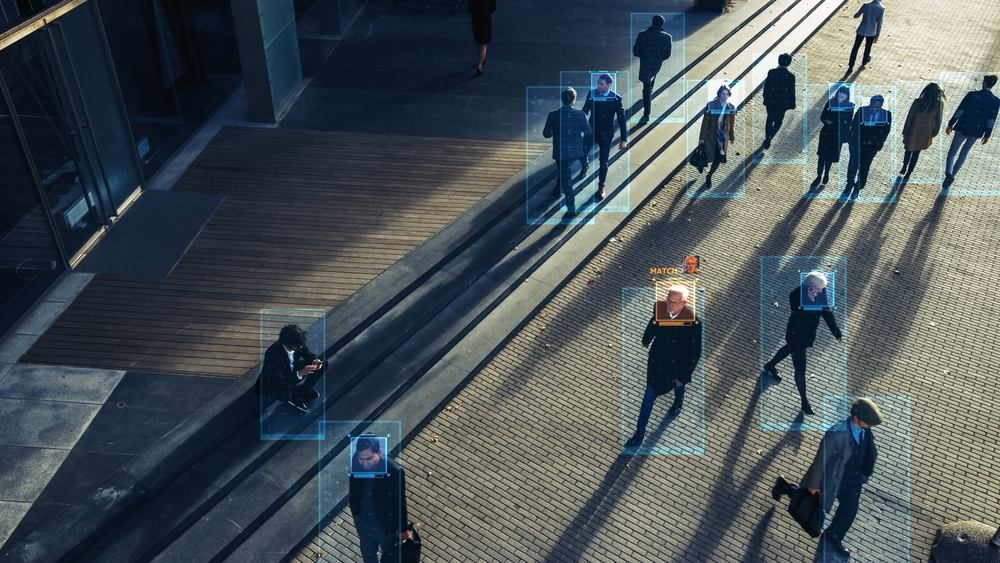
The UAE is rapidly becoming one of the world’s most ambitious markets for AI-enabled infrastructure, from smart mobility and connected public spaces to increasingly intelligent security environments. But one of the most important shifts is happening inside the region’s camera networks, where artificial intelligence is fundamentally changing the role of video surveillance.
For decades, the role of surveillance cameras was relatively straightforward. They were deployed to detect incidents, record footage, support investigations, and in some cases provide evidence that could help prevent future crime or improve response. Their value was tied to visibility. Cameras helped organisations understand what had already happened.
AI is fundamentally changing that role
Today, surveillance systems are no longer simply recording video. They are becoming intelligent, real-time tools capable of analysing movement, recognising anomalies, identifying behavioural patterns, and generating contextual insight that supports faster, more informed decisions. A camera can now detect unusual crowd movement in a transport hub, identify objects left in restricted areas, monitor perimeter activity, or recognise behaviour that may indicate an emerging threat before an incident escalates.
The scale of this transformation is already reflected in the market. The global AI video surveillance sector reached US$6 billion in 2025, underscoring how rapidly analytics are being embedded into physical security operations. At the same time, the Middle East is forecast to be one of the fastest-growing regions for AI-enabled surveillance adoption, driven by investments in critical infrastructure, public safety, transport systems, and increasingly sophisticated urban environments.

True value of AI in surveillance does not come from video alone
Modern systems now generate significant volumes of metadata, the contextual intelligence that gives meaning to what cameras detect. This can include movement patterns, object classification, behavioural alerts, occupancy information, environmental context, and event-based analysis. In practical terms, this allows security teams to move beyond passive observation and toward more proactive decision-making.
A transport operator can respond more quickly to congestion or crowd density during peak periods. A security team can identify unusual activity before it becomes a larger threat. A critical infrastructure site can detect abnormal movement at the perimeter in real time. Across sectors, surveillance is shifting from recorded evidence to actionable intelligence. But intelligence only becomes valuable when it can move beyond the device that captured it. This is where one of the industry’s biggest challenges is emerging.
Across many deployments, cameras, analytics platforms, access control systems, and video management technologies are still often procured separately and built on incompatible or closed architectures. Each system may perform effectively on its own, but struggle to exchange intelligence across vendors, platforms, or operational domains.
AI may generate increasingly sophisticated insight, but if metadata cannot be shared or interpreted consistently, much of that intelligence remains trapped inside isolated systems. Organisations end up managing multiple streams of information rather than a connected view of risk, operations, and response.
As surveillance becomes more intelligent, interoperability is becoming central to scale. This is not simply a technical consideration. It is a strategic one. The future of security infrastructure will depend not only on how accurately systems detect activity, but on whether intelligence can move across broader ecosystems where it can strengthen visibility, improve response, and support more resilient decision-making.
Trust is becoming a challenge
As AI tools become more advanced, so too does the ability to manipulate digital media with increasing realism. Deepfakes, synthetic video, and AI-generated content are beginning to challenge long-held assumptions about authenticity. In sectors that rely on surveillance footage for investigations, legal proceedings, compliance, public safety, or operational accountability, this introduces a serious question; can digital evidence still be trusted?
For much of the security industry, video has traditionally been treated as one of the most reliable forms of evidence. But in an environment where manipulated footage can appear increasingly convincing, visual proof alone may no longer be enough.
Authenticity must be verifiable
This issue extends beyond law enforcement or legal use cases. In an AI-driven environment, the credibility of digital footage can influence operational decisions, safety responses, insurance claims, internal investigations, and public trust. If surveillance is expected to provide reliable evidence, then proving the integrity and provenance of that evidence becomes increasingly important.
The conversation around AI in security must therefore expand. For years, the industry has understandably focused on how intelligent surveillance can detect threats, automate monitoring, or improve situational awareness. Those capabilities remain essential. But the next phase of progress will be defined by something broader: whether that intelligence can be shared effectively, and whether the evidence it produces can still be proven authentic.
The future of surveillance will be shaped by two priorities: interoperability and trust.
One determines whether intelligence can scale across connected ecosystems. The other determines whether that intelligence, and the footage organisations depend on, remains credible in a world where synthetic media is becoming increasingly sophisticated.
AI is making surveillance dramatically more capable. But the systems that define the next generation of security infrastructure will not simply be those that see more, detect faster, or analyse better. They will be the systems that can connect intelligence across environments, preserve trust in digital evidence, and ensure that what organisations rely on can still be proven real. In the AI era, smarter surveillance will matter. But trusted surveillance will matter more.









Discussion about this post