

Where a company establishes its next regional operation has become a far more strategic decision than it once was. Enterprise technology leaders are reassessing not only where they can access talent or reduce operating costs, but how a location fits into a broader growth strategy.
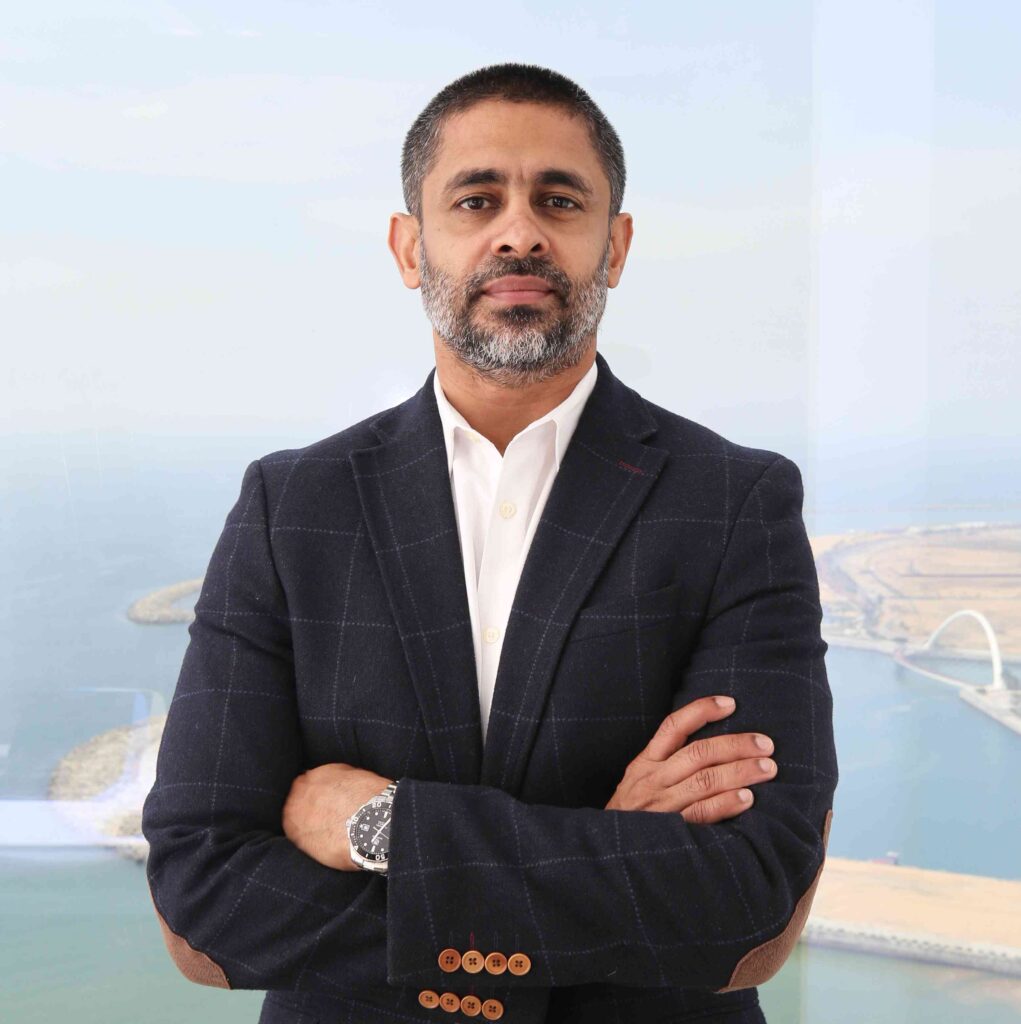
“We are seeing a shift from opportunistic expansion to strategic anchoring,” says Thulci Aluwihare, Deputy Managing Director, CHEC Port City Colombo. “Companies are no longer simply expanding into established hubs. Increasingly, they are evaluating jurisdictions based on long-term outcomes such as regulatory predictability, capital mobility, digital infrastructure, talent depth, cost efficiency, and proximity to multiple markets.”
Expansion is also now being judged across the whole operating model, with operational continuity carrying greater weight alongside growth. “There is a noticeable move toward regional platforms rather than single-country operations,” Aluwihare says. “Increasingly, expansion decisions are being shaped by risk diversification and operational continuity, alongside growth potential.”
That recalibration is widening the field beyond established business and technology hubs. Global technology companies and digital-first enterprises are looking across a broader set of markets for talent, delivery capacity and digital infrastructure, including along the Middle East-South Asia corridor.
Sri Lanka is one market seeking to position itself within that equation. Its access to South Asian talent and an established services base gives it a potential role as a complementary operating location for companies extending their regional capabilities.
The country’s ICT sector already generates approximately US$1.2 billion in exports, employs more than 140,000 professionals and is home to more than 500 ICT companies. Under its Digital Economy Strategy, Sri Lanka is targeting US$5 billion in ICT exports by 2030, reflecting its ambition to strengthen its position as a regional technology and services hub.
“Sri Lanka occupies a strategic position in the Indian Ocean, linking South Asia with the Middle East, Southeast Asia, and East Africa. For Middle Eastern enterprises in particular, this creates a compelling proximity advantage, enabling scalable delivery while maintaining alignment with Gulf markets,” says Aluwihare.
Value beyond geography
Building on that foundation is Port City Colombo, Sri Lanka’s first multi-service Special Economic Zone (SEZ).
“Port City Colombo was conceived as a next-generation SEZ and integrated master-planned city for South Asia, drawing inspiration from the long-term urban and economic development models of Dubai and Singapore,” explains Aluwihare.
He adds: “It operates under the Colombo Port City Economic Commission Act of 2021, which establishes a distinct progressive regulatory framework administered by a single-window authority. The Commission is empowered to licence, regulate and facilitate businesses within the zone, significantly reducing administrative friction.”
The SEZ’s framework allows 100 percent foreign ownership, places no cap on foreign employment, permits transactions in 16 designated foreign currencies and enables enhanced capital mobility. Eligible businesses can also benefit from concessionary corporate income tax rates, alongside customs and border tariff waivers during the business set-up phase.
“It also incorporates investment protection mechanisms embedded in law and contract, a dedicated International Commercial Dispute Resolution Centre, and provisions supportive of Sharia-compliant finance and Islamic banking, features that resonate strongly with institutional and Middle Eastern investors,” says Aluwihare. “The aim is long-term credibility – a rules-based environment aligned with international governance standards, offering predictability and commercial agility.”
Port City Colombo also does not impose a minimum investment threshold for access to its fiscal and non-fiscal benefits, allowing companies to establish at a scale that suits their needs and expand over time. That model aligns well with technology and services firms, where growth is often tied more closely to teams and client demand than to heavy upfront investment in physical assets.
The composition of Port City Colombo’s first wave of registrants offers a glimpse of how that is playing out. “Service-led sectors typically move first into emerging hubs because they require lower capital lock-in, but they demand strong digital connectivity, talent depth, and regulatory efficiency,” says Aluwihare. “IT and ITES companies account for nearly 50 percent of early registrants. This reflects confidence in both the SEZ framework and the country’s ability to support globally integrated, digitally driven operations.”
The bigger picture
Technology companies entering a new market can serve as a strong indicator of whether an operating base can support growth. Many IT and ITES businesses are not tied to local demand, serving clients and functions across multiple markets. Their location choices can therefore offer a measure of how effectively a market can complement an organisation’s wider global network.
At Port City Colombo, IT and ITES firms provide that first signal. The greater opportunity lies in what can follow, as services-led activity expands into a broader mix of technology operations and higher-value functions. “While services-led activity establishes early momentum, we are equally focused on attracting technology segments that anchor long-term capital and ecosystem depth,” says Aluwihare.
He adds: “There is strong potential in fast-to-deploy operations such as Business Process Management (BPM) / Business Process Outsourcing (BPO), which allow companies to establish regional presence relatively quickly, with the aim of evolving to Global Capability Centres (GCCs) over time.”

Beyond BPM/BPO, Port City Colombo is also looking to attract companies seeking to establish regional headquarters, global delivery centres, innovation labs, data infrastructure and business continuity facilities. Increasingly, this includes nano-GCCs – small, highly specialised teams in AI, R&D and product engineering that compete on capability rather than headcount, which makes them well suited to a market of Sri Lanka’s scale.
“Recent shifts in global technology infrastructure planning are prompting firms to diversify where critical digital infrastructure is located. In that context, jurisdictions that offer regulatory clarity, reliable connectivity, and geographic neutrality are gaining attention as complementary locations to existing hubs,” says Aluwihare.
Moving up the technology value chain raises the bar for infrastructure and skills. AI intensifies those demands, particularly around computing capacity, secure data environments, and specialised technical talent.
“Supporting AI-driven enterprises requires infrastructure and talent,” says Aluwihare. “Sri Lanka has a well-educated, English-proficient workforce with experience serving global clients across software development, BPM and enterprise solutions. National investment continues in fibre-optic connectivity, telecommunications infrastructure, and digital resilience. Within Port City Colombo, the planning framework accommodates digital infrastructure, secure data environments, and computing capabilities, which are all prerequisites for AI-led operations.”
The country’s emerging national AI strategy gives that build-out a wider national context. Research capacity will matter alongside infrastructure as the ecosystem matures.
“AI ecosystems also depend on research collaboration and knowledge exchange. As Port City Colombo evolves, it will increasingly facilitate partnerships between enterprises, universities, and innovation platforms,” Aluwihare says. “Ultimately, our objective is to develop not just a services cluster, but a diversified, future-ready technology ecosystem that spans digital services, infrastructure, and innovation-led enterprises.”
Building that ecosystem also comes back to the depth of the talent pipeline. Sri Lanka produces approximately 30,000 graduates annually and maintains a strong tertiary and vocational education ecosystem.
“We are engaging closely with universities to align with industry needs, while the development of international-standard educational institutions within the city will further broaden the talent pool,” Aluwihare says. “Ultimately, talent retention is as critical as talent generation.”
At a national level, the opportunities emerging around the SEZ sit alongside a wider push to accelerate the country’s trajectory in the regional and global technology economy. “Sri Lanka’s Digital Economy Strategy for 2025–2030 is built on scaling service exports, strengthening digital infrastructure, and creating globally competitive technology capabilities,” says Hon. Eng. Eranga Weeraratne, Deputy Minister of Digital Economy, Sri Lanka.
He adds: “Port City Colombo complements this vision by providing a structured, internationally aligned platform that enables IT and BPM enterprises to establish regional operations with regulatory clarity and operational efficiency. As the sector accelerates, platforms such as Port City Colombo can play a pivotal role, not only in attracting new investment, but in anchoring higher-value digital services, fostering innovation, and positioning Sri Lanka as a trusted regional technology hub.”
The broader technology ambition is not limited to companies establishing operations within the zone. Port City Colombo is also looking at how it can support a wider network of industry engagement, collaboration and investment.
“Beyond hosting IT/ITES and BPM operations, planned infrastructure for the city, including an international-grade convention centre, co-working environments, and innovation spaces will support other innovation-led sectors,” Aluwihare says. “The country already hosts technology events such as WSO2Con Asia, Disrupt Asia, and TiECon Sri Lanka. We aim to play an increasing role as a venue for regional engagement, cross-border dialogue, and investment collaboration.”
Looking further ahead, a more connected technology corridor between the Gulf and South Asia could become an increasingly important part of the regional technology economy. As companies expand across markets, individual hubs are being assessed less in isolation and more by the role they play across the broader organisation. Sri Lanka has an opportunity to play a vital role in that equation, linking its technology base with the capital, enterprise demand and global reach of Gulf markets.
“Our vision is to position Port City Colombo as a regional convergence point for globally mobile digital industries, bridging South Asia, the Middle East, and Southeast Asia,” Aluwihare says.
As technology companies scale across regions, a location’s value will increasingly be defined by how well it connects markets, businesses and people. The places that emerge strongest will be those that can translate that into new opportunities for innovation, investment and growth.
“As global IT and digital enterprises rethink where they build their next phase of growth, locations that combine regulatory clarity, deep talent pools, strategic connectivity, and long-term policy vision will outperform,” says Aluwihare. “The early footprint of technology firms at Port City Colombo reflects growing confidence in Sri Lanka’s trajectory. The goal is to build on that momentum and create a future-ready technology ecosystem that can attract the next generation of globally mobile digital industries.”









Discussion about this post