

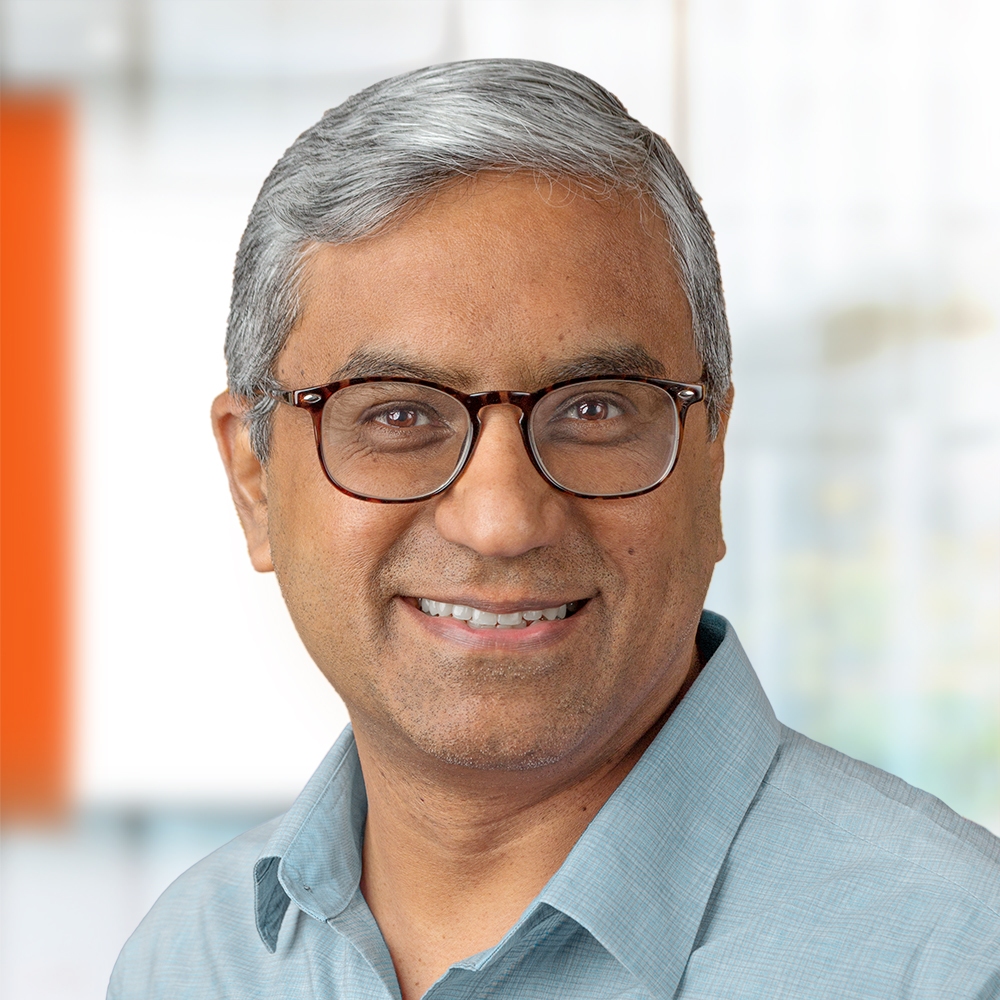
The future of IT is becoming increasingly autonomous, but people remain at the centre of every critical decision. Krishna Sai, Chief Technology Officer at SolarWinds, explains why trust, governance and human judgement will determine whether AI delivers on its promise
SolarWinds’ latest research suggests AI is reshaping IT far beyond automation. How is the role of the IT function evolving as enterprises move towards more autonomous operations?
IT is going through an identity shift unlike anything we’ve seen since the move to cloud. For decades, IT was defined by what we call ‘wrench time’ — reacting to tickets, manually troubleshooting, keeping the lights on. AI is changing the level of abstraction teams operate at. Instead of working at the lowest layers of infrastructure plumbing, IT teams are increasingly engaging at higher levels. They’re designing workflows, setting guardrails, and defining the outcomes AI-powered systems execute autonomously. Our 2026 IT Trends Report: The Human Side of Autonomous IT highlighted this when it found that 80 percent of IT professionals say their role is shifting from operator to orchestrator.
That doesn’t mean fewer people are needed. It means IT’s purpose inside the enterprise is being redefined, from executing tasks to designing and governing the systems that execute them.
Your research reveals a significant gap between leadership confidence and frontline reality when it comes to AI readiness. Why do you think that disconnect exists?
The numbers are stark. 47 percent of C-suite executives believe their IT organisations are extremely prepared to meet evolving AI skill requirements, but only 13 percent of frontline professionals agree. That mismatch matters because autonomous IT can’t be mandated from the boardroom. It has to be absorbed, trusted, and operationalised by the engineers, administrators, and operators who work with these systems every day. Leadership sees the strategy and the roadmap. Frontline teams see an operational gap. They’re the ones validating AI-generated recommendations, cross-checking outputs against logs and metrics, and building trust one incident at a time. Until organisations close that gap in strategy and lived experience, confidence at the top will keep outpacing readiness on the ground.
Many IT professionals say AI has made their roles more demanding rather than less. How has greater automation introduced new complexity?
Given the typical person’s everyday experience of AI, whether that’s summarising reports in seconds, or drafting emails in an instant, the tendency is to perceive this technology to be an incredible productivity booster. That’s true, but the outcome isn’t that there’s less work for people to do. In reality, AI changes the nature of the work. So, while it can surface potential root causes in seconds, teams still need to spend hours validating whether those insights are correct.
That’s the paradox: faster insight generation doesn’t automatically translate into faster resolution. Instead, it can increase cognitive load as humans sift through volumes of AI-generated recommendations, reports, and summaries. This is the operational gap of transformation, where the technology has advanced but human processes and trust models haven’t caught up yet. And this is why we’re seeing IT professionals report that AI is changing how they work far more than how much they work. And also interestingly, that shift toward validation, judgment, and oversight is, by definition, more demanding.
Much of the conversation around AI focuses on technology, but your research suggests the bigger challenge may actually be human. Why are organisations finding the people side of AI transformation more difficult than the technology itself?
At the heart of every conversation about autonomous IT is the defining issue of trust. Without trust, AI insights result in suspicion rather than action. Without trust, orchestration stalls at the dashboard level, and autonomy remains theoretical. The good news is that this trust isn’t emotional, it’s structural. And it can be gained through verification.
One of the most common missteps we see is organisations focusing solely on AI’s capability rather than its accountability. Systems can generate recommendations at unprecedented speed, but too often fail to explain how they reached those conclusions. That absence of explainability forces humans into constant validation mode, cross-checking AI outputs against logs, metrics, and tribal knowledge, all of which quietly negates the efficiency gains AI was supposed to deliver in the first place.
What’s preventing organisations from moving beyond AI experimentation to truly autonomous IT?
As mentioned, trust is still a major barrier. And it’s compounded by fragmented visibility and immature governance. You can’t orchestrate autonomously if your data lives in disconnected silos because AI simply amplifies whatever foundation you give it. If the foundation is fractured, AI multiplies the cracks. Our report shows 67 percent of organisations experience moderate to extreme infrastructure fragmentation, spanning on-premise systems, multiple cloud providers, containers, SaaS platforms, and edge environments, each with its own tooling and telemetry. On top of that, most organisations are deploying AI faster than they’re defining the rules around it. Without clear policies, escalation paths, and audit mechanisms, organisations simply cannot allow systems to act independently, no matter how capable those systems appear. So, with trust, visibility, and governance, if you miss any one, autonomy stays theoretical.
SolarWinds talks about enabling practical orchestration rather than simply adding more AI capabilities. What does that mean in practice, and how are you helping customers operationalise AI in a way that’s trusted, explainable and scalable?
Picture the scenario every IT professional knows: an alert fires, and instead of dropping everything to chase it, you’re the one deciding whether it’s worth chasing at all. That’s what being back at the centre feels like. It’s not about executing repetitive tasks, but architecting systems that sense, decide, and act with speed and consistency on your behalf.
In practice, we build an operating model that integrates observability, AI-assisted reasoning, and governance into one coherent system, rather than bolting AI onto existing tool sprawl. We call this bounded autonomy as you don’t hand over the keys on day one. Think of it like autonomous driving. There are levels, and each level earns trust. You start with low-risk tasks; routine maintenance, self-healing actions. As verification builds confidence, you expand scope.
As AI becomes embedded across increasingly complex hybrid environments, how important are visibility and operational context in enabling organisations to move from AI-driven insight to intelligent action?
No one designs their way into fragmented IT. It creeps in through well-meaning activities, say a cloud migration here, a new SaaS tool there, or an acquisition that brings its own stack. Multiply that across networks, applications, databases, containers, and infrastructure, and years later you’re left with independent tools that each see only their own slice of the environment. That tool sprawl creates blind spots, and blind spots erode trust. AI becomes brittle when it doesn’t have full context, as it can hallucinate or miss critical dependencies entirely.
So rather than adding another point tool, our approach is to bring telemetry from across the enterprise into a single shared data plane. That’s not a feature, it’s the fix for the specific, painful problem of teams making decisions on partial information. Once that visibility is unified, AI can finally reason across layers instead of guessing at what it can’t see.
Looking ahead, what will distinguish the organisations that successfully embrace autonomous IT from those that continue to struggle with AI adoption, and what should technology leaders be prioritising today to prepare for that future?
My advice to fellow C-suite leaders is simple: don’t chase AI tools. Chase the discipline to build governance, visibility, and trust into your systems from day one, instead of retrofitting them once something breaks. Design your AI workflows with human-in-control guardrails. Adopt bounded autonomy instead of flipping an all-or-nothing switch. Invest in full-stack visibility across your hybrid environment before you invest in more automation. And treat governance as something that enables your team to move, not something that slows them down.
Get all this right, and you’ll spend less time reacting to fires and more time designing systems that hold up under pressure. You’ll move faster, but confidently, because you can see what’s happening and you’re still in control. This was never about replacing your people. It’s about giving them room to do more. That shift, from operator to orchestrator, isn’t just achievable. It’s inevitable.







Discussion about this post